
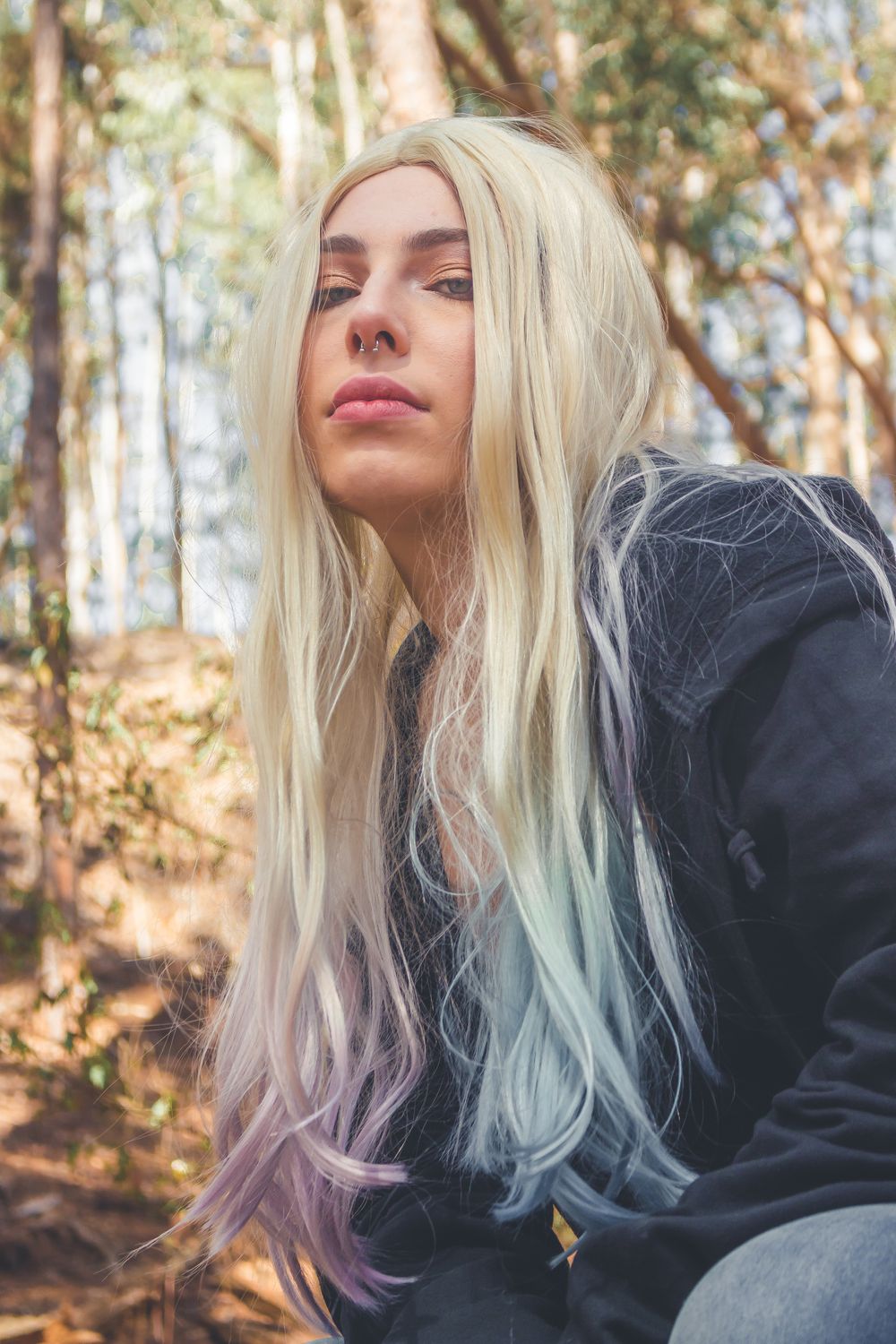
15 Winter Hair Colors for a Fresh Seasonal Look
There is a particular kind of light in December — low, flat, and honest. It is the light that makes summer blonde look washed out and warm autumn copper look suddenly tired. If you have been staring at your reflection wondering why your hair does not match the season anymore, you are not imagining it. Hair color has seasons, and winter has a very clear opinion: go cooler, go deeper, or go bold — but stop fighting the light.
These winter hair colors are chosen for exactly that light. Icy blondes and silvers that look frosted instead of flat. Deep jewel reds and wines that hold their richness indoors and in daylight. Near-black darks that look expensive under a coat and scarf. And a few bold, frost-bitten fashion colors for anyone who wants winter to be a statement, not a hibernation. Below are fifteen shades, each with who it suits, how to keep it looking good in cold weather, and the exact words to use at your appointment. If you want the autumn palette that came before this one, our fall hair color ideas list gathers fifteen warm shades in one place.
Quick answer: Winter hair colors split into three groups: icy blondes and silvers (platinum, silver, violet ash, frosty lavender), deep jewel reds and wines (mulled wine, sangria, dark crimson, berry red), and dark or bold shades (black with chocolate, cobalt blue, navy, evergreen, rose gold). Cool skin tones usually suit the icy and ash shades best, warm skin tones usually suit the deep wines and chocolate darks, and the fashion colors suit anyone willing to maintain them. Start with Icy Platinum Blonde (#1) for the clearest winter blonde, or Mulled Wine (#5) for the easiest deep red.
What makes a color a winter color?
Not every dark or cool shade is automatically a winter shade. Four things make a color work in winter:
- It holds up in cool, flat light. Winter daylight is bluer and weaker than summer light. Shades with clear, cool, or deep jewel tones keep their character in it; soft warm tones can look muddy or washed out.
- It looks good under a hat and scarf. Winter hair spends half its life flattened by a hat and framed by a coat collar. Colors with dimension — a lighter face frame, a soft melt, a money piece — still read when the shape is hidden.
- It grows out softly. Salon visits get harder to schedule in bad weather and around the holidays, so winter colors that are built with a soft root, a melt, or a balayage placement age better than a hard regrowth line.
- It survives cold weather. Cold air, indoor heating, and hot showers all dry hair out, and dry hair shows color unevenly. Winter shades need a little more conditioning care than a summer gloss — the care section below covers it honestly.
1. Icy Platinum Blonde
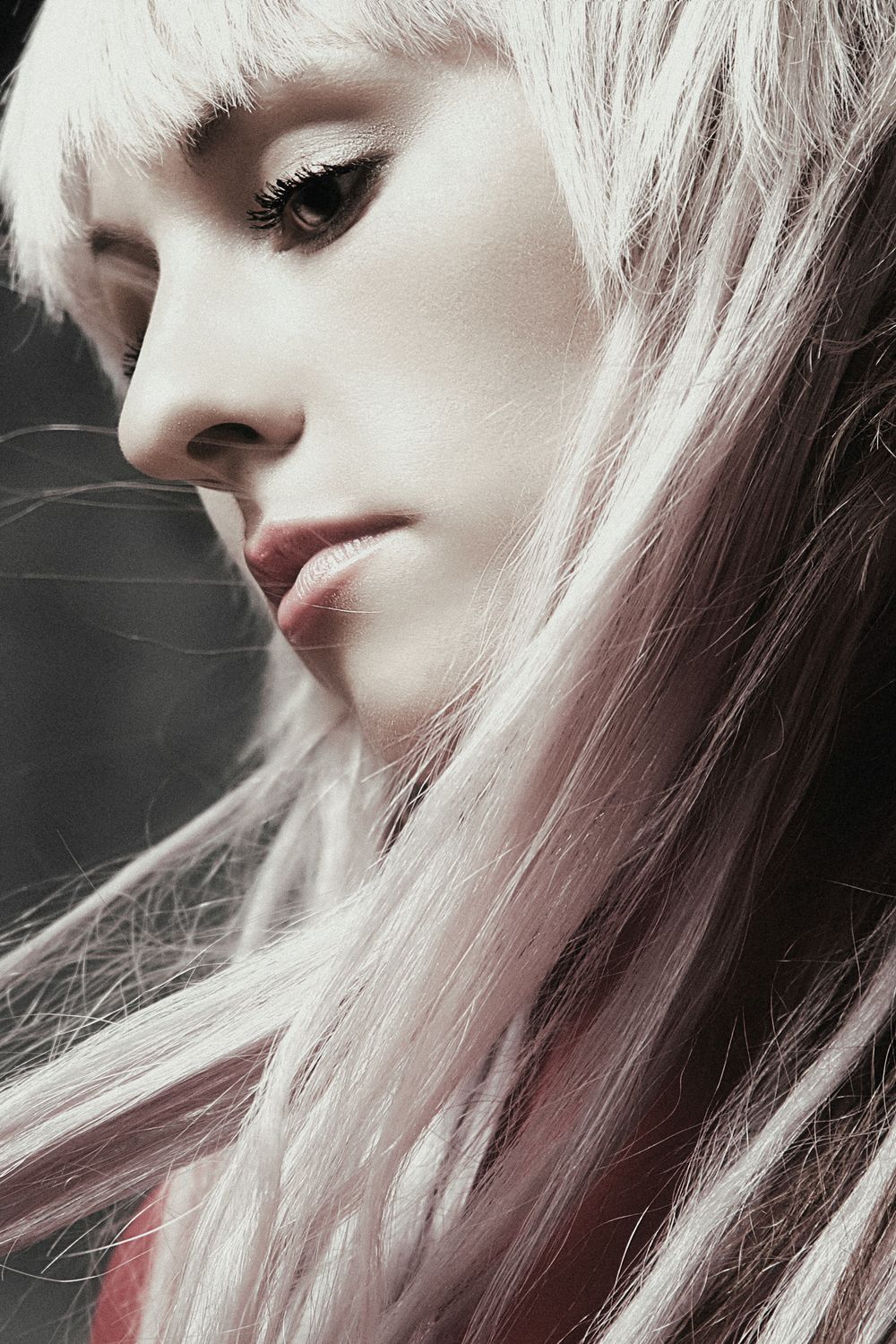
This is the winter blonde in its purest form: a near-white blonde with a cool, frosted finish and no warmth left in it. In summer light it can look stark; in winter light it looks like it belongs there. The dimension comes from the faintest silver and pearl tones through the lengths, so it reads as ice rather than flat white.
Who it suits: Fair to light-medium skin with cool or neutral undertones, and anyone whose natural color is already light blonde. On dark hair it needs significant lightening, so it is the highest-commitment blonde on this list.
Styling tip: A smooth, straight finish shows the icy tone best. Waves are fine, but heavy curling breaks the color into pieces and the frost effect softens.
Ask for: “An icy platinum blonde — lifted to a pale blonde, then toned with a pearl or silver toner, no warm or golden tones left in.”
2. Silvery Gray Hair
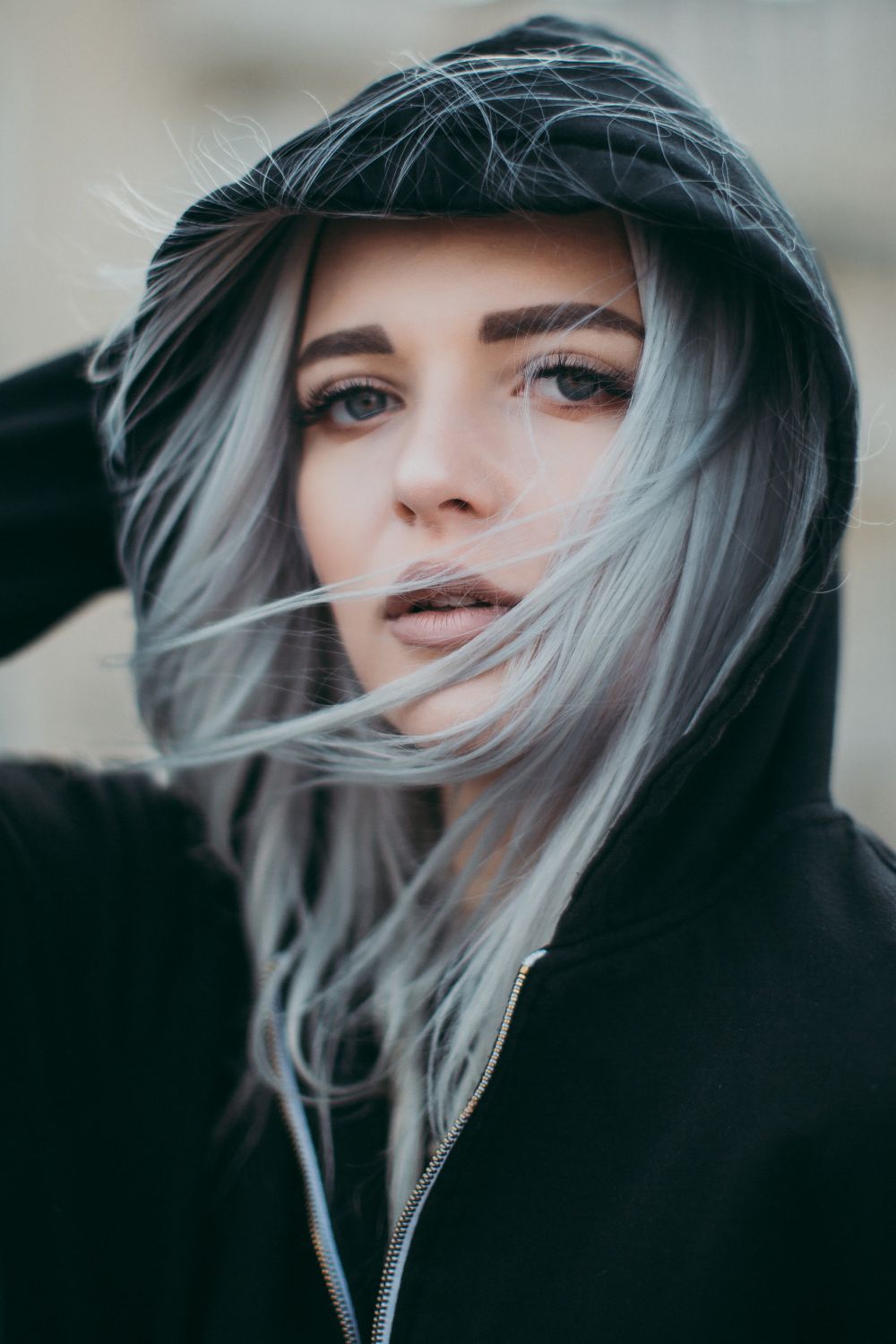
Silver is winter’s most literal color: hair the shade of frost on a window. It sits between platinum and gray — cooler than platinum, softer than a flat gray — with a metallic shine that catches low winter light. On a bob shape it looks especially sharp, which is why it pairs so well with the cut in our gray bob hairstyles guide.
Who it suits: Cool and neutral skin tones, and anyone already going gray who wants to make the silver deliberate rather than accidental. It suits straight and wavy hair best, because a smooth surface shows the metallic shine.
Styling tip: Shine is the whole point here. A lightweight serum on the ends only, after drying, keeps silver looking polished rather than dull — heavy products weigh it down and the metal goes matte.
Ask for: “A silvery gray — a cool metallic silver with soft dimension, not a flat gray, and not white.”
3. Pale Violet Ash
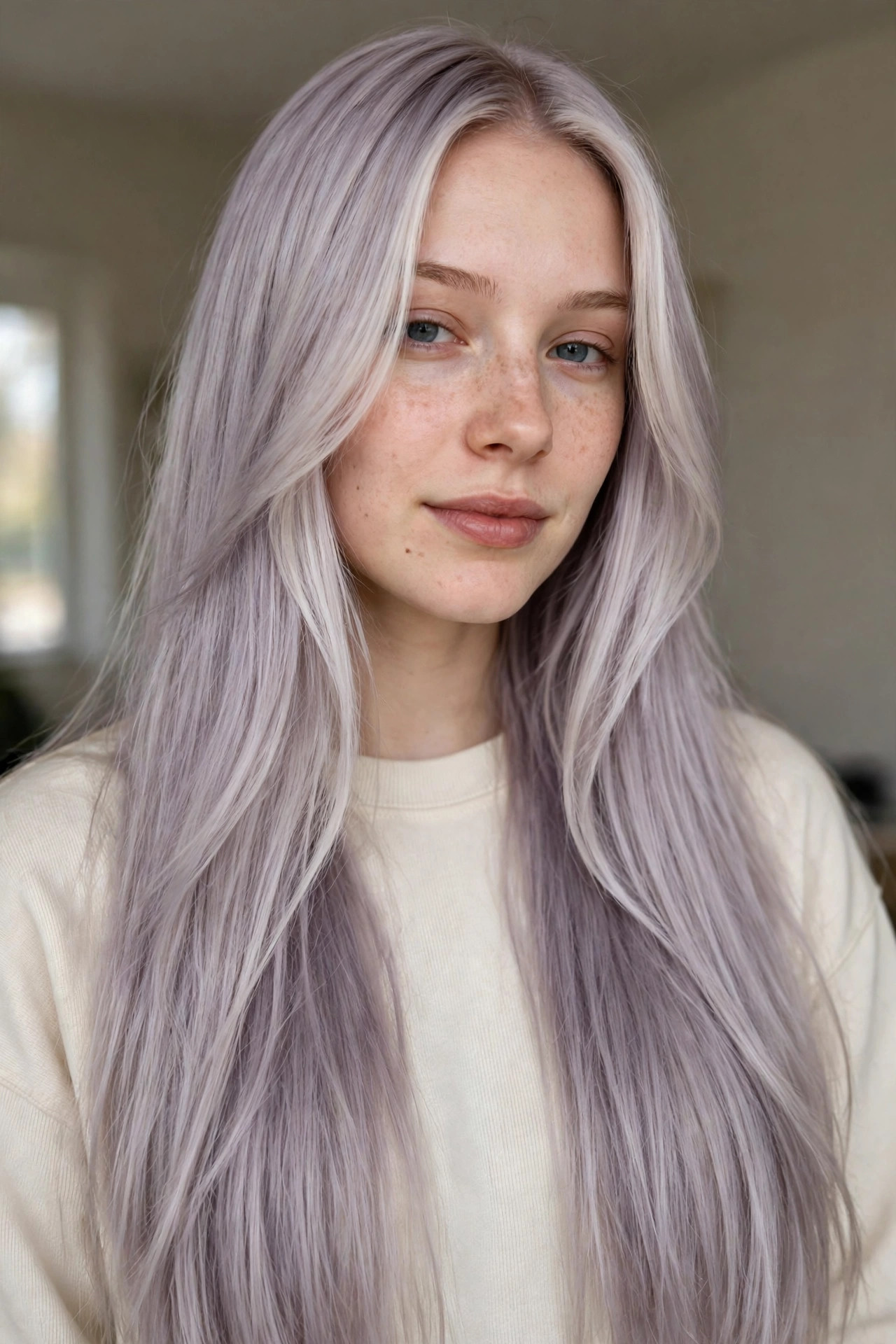
Pale violet ash is the quietest icy blonde on this list: an ash blonde with the faintest violet cast, like the sky just before snow. It cools down a blonde that has gone brassy without pushing it into silver, and the violet is subtle enough to read as a tone rather than a color.
Who it suits: Natural blondes and light brunettes whose hair pulls warm or yellow, and cool skin tones that have ever found plain ash blonde a little flat. It is a good first step into winter blonde for anyone nervous about full platinum.
Styling tip: A violet-toned shampoo or mask, used every few washes according to the product’s directions, keeps the ash from warming up between appointments. Used too often it can push the violet too far, so treat it as a top-up, not a routine.
Ask for: “A pale violet ash blonde — cool ash with a whisper of violet, soft dimension, no yellow and no obvious purple.”
4. Frosty Lavender and Beige Blonde
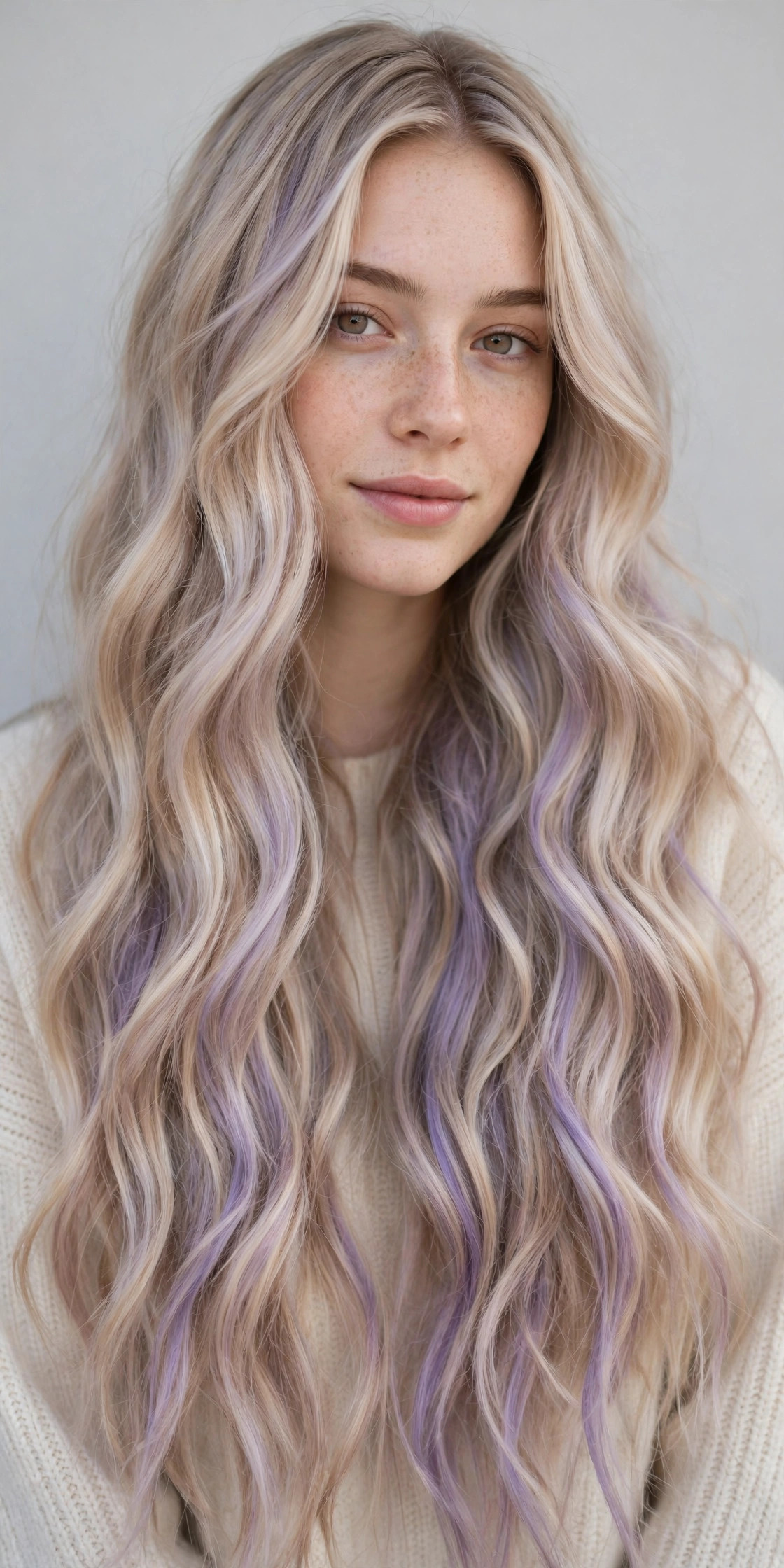
Lavender as a lowlight, not a statement: soft frosty lavender woven through creamy beige blonde lengths. The lavender sits quietly in shadow and comes forward in daylight, so the color reads as a cool blonde with something interesting happening underneath — never as a purple dye job.
Who it suits: Fair to medium skin with cool or neutral undertones, and blondes who want a winter change without going darker or icier. It suits long and medium lengths best, because the lavender needs room to graduate through the blonde.
Styling tip: Keep the lavender cool by washing in cooler water. Hot water opens the hair’s surface and lets pastel tones escape faster, and lavender is one of the first tones to go.
Ask for: “Frosty lavender lowlights through a beige blonde — lavender as a quiet undertone, not the main color, blended with no lines.”
5. Mulled Wine Hair
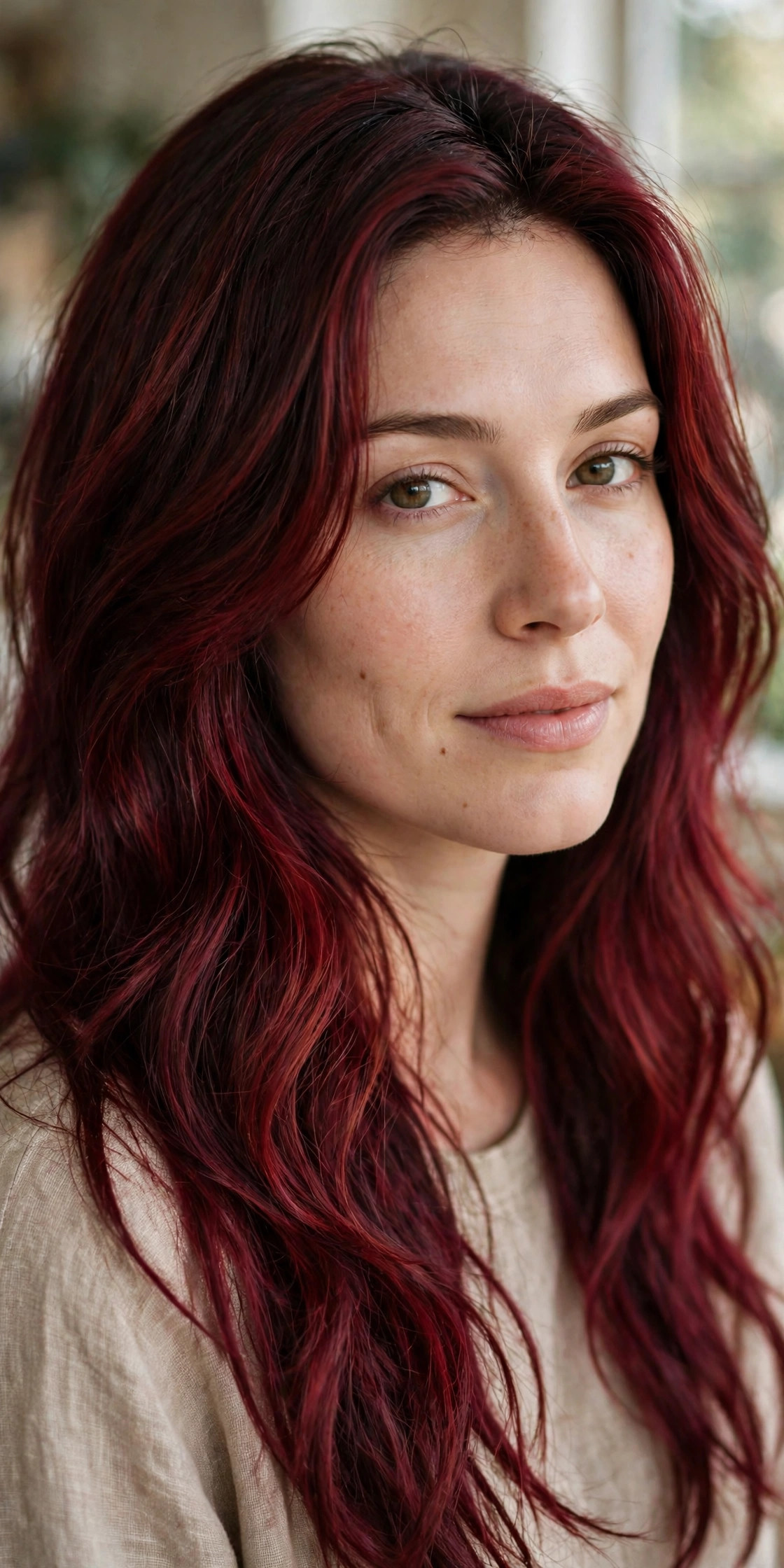
Mulled wine is winter’s most wearable deep red: a dark, spiced red with warmth and depth, like the drink it is named for. It reads as a rich brunette-red indoors and opens into wine tones in daylight, with two or three closely related red tones blended so the color has movement. For the deeper, softer side of red, our velvet hair color ideas list covers the finish family this shade belongs to.
Who it suits: Fair to medium skin with warm or neutral undertones, and medium brown hair, where the wine can be built over the natural depth with less lightening than a bright red would need. It flatters longer lengths, because the blended tones need room to travel.
Styling tip: A color-depositing conditioner in a red shade, used every few washes according to the product’s directions, keeps the wine from softening into plain brown between appointments.
Ask for: “A mulled wine red — deep spiced red with two or three blended red tones, darker at the roots, no bright or orange red.”
6. Winter Sangria
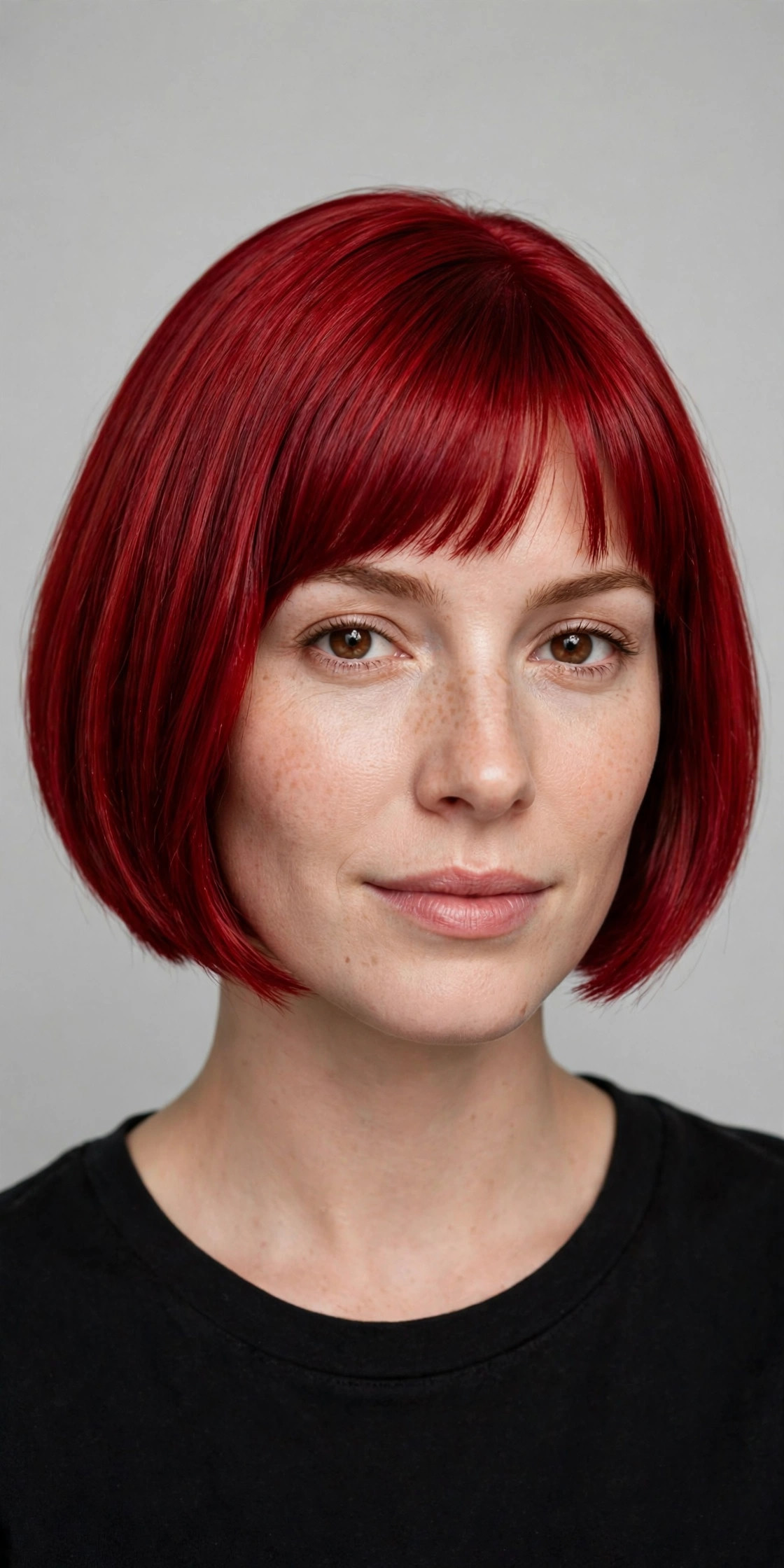
Sangria is mulled wine’s brighter sister: a vivid, juicy red with more sparkle and less depth, made for short and edgy shapes. On a pixie or a short bob it reads as a deliberate statement; on long hair it can overwhelm, which is why the short cut matters as much as the shade.
Who it suits: Fair skin especially, where the brightness of the red makes the complexion look luminous, and anyone with a short cut who wants the color to do the talking. It suits straight and slightly wavy short hair best.
Styling tip: Keep the cut sharp and the finish smooth. A blunt outline gives the bright red a clean surface to reflect off, so the color looks liquid rather than fuzzy.
Ask for: “A vivid winter sangria red on a short cut — bright but deep, not orange, with the color saturated through the lengths.”
7. Dark Crimson Balayage
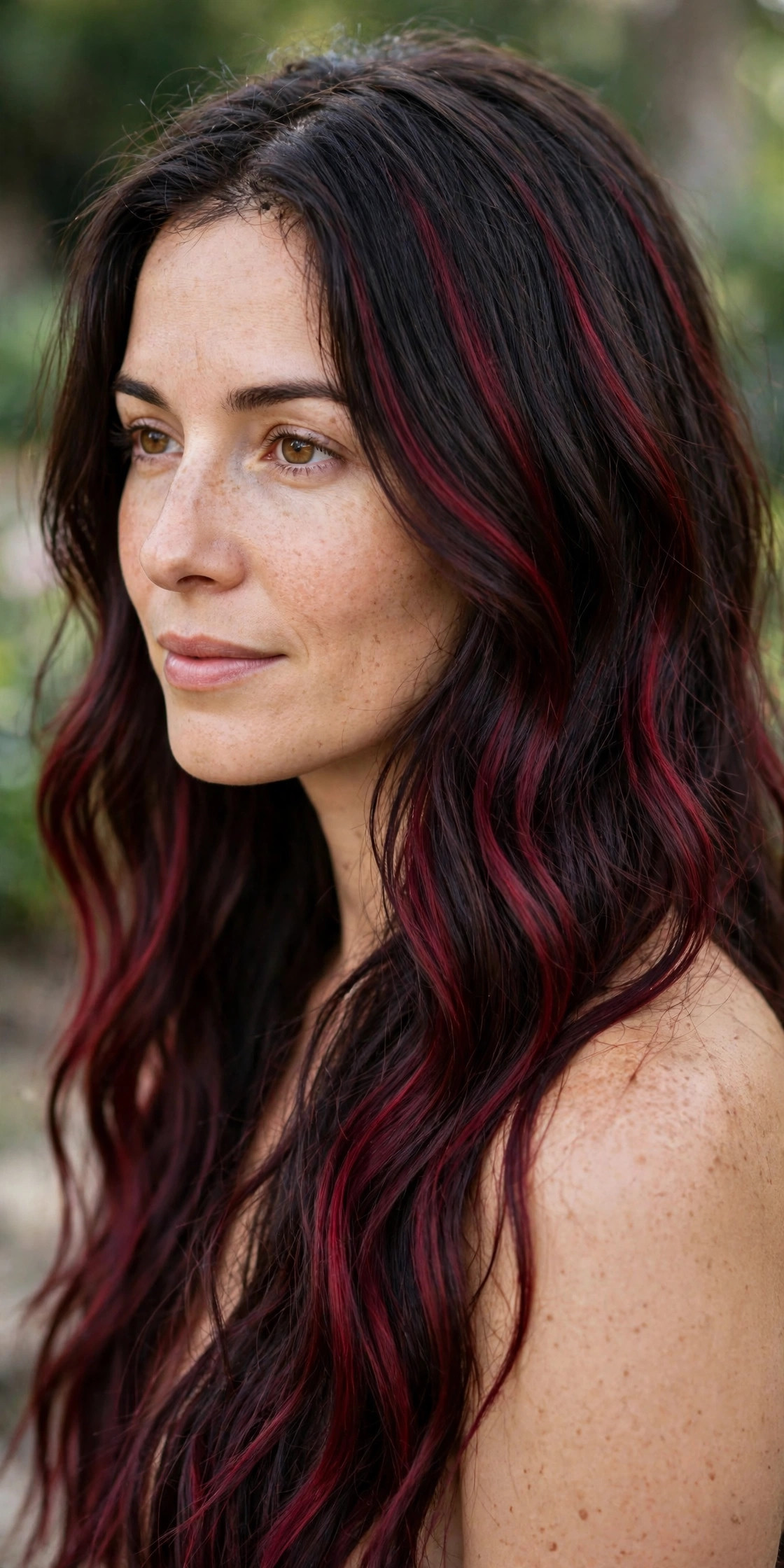
Crimson placed the balayage way: a dark brunette base with hand-painted crimson ribbons through the mid-lengths and ends, darker at the roots and brighter where the light hits. The balayage placement is what makes this the lowest-maintenance red on the list, because there is no hard regrowth line — the crimson simply softens as it grows.
Who it suits: Brunettes who want a bold winter change without bleach all over, and long or medium hair, where the painted placement has length to graduate over. It suits wavy hair particularly well, because the wave pattern hides the blend points.
Styling tip: Waves are the point here — the painted dimension only reads when the hair moves. A large-barrel wave through the lengths, brushed out soft once cool, shows the crimson graduation better than a sleek finish.
Ask for: “A dark crimson balayage — deep brunette base, hand-painted crimson through the lengths, soft grow-out, no foil lines.”
8. Berry Red on a Long Bob
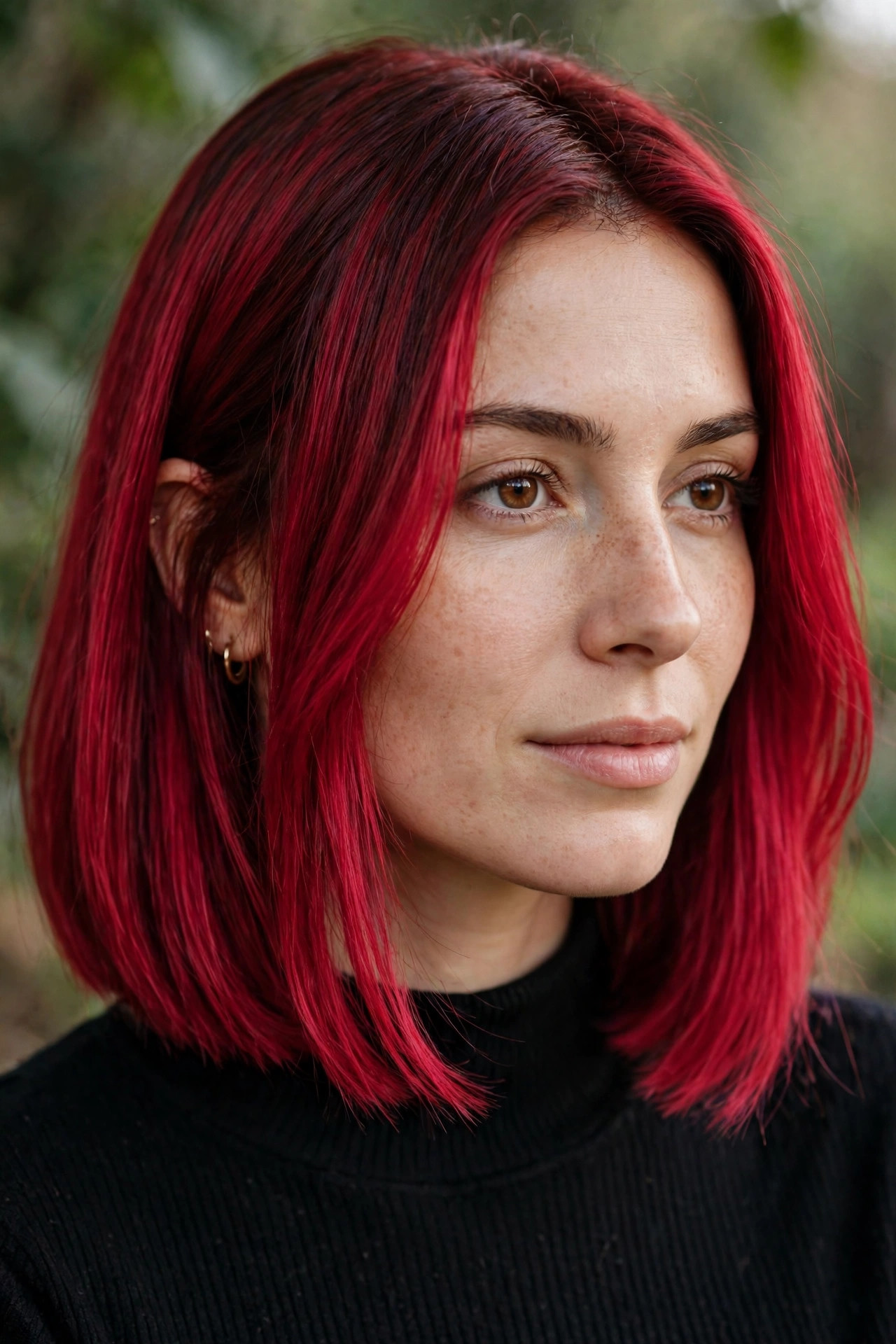
Berry red is brighter and redder than Fall’s cherry cola — a vivid berry tone on a long bob, with no brown base muting it. The bob shape matters: the clean outline gives the color a smooth surface, and the length is short enough that the bright red never overwhelms the face.
Who it suits: Fair to medium skin with cool or neutral undertones, and straight or slightly wavy hair — the blunt cut does half the work, so texture matters less than the shape. It is the boldest red here that still feels polished.
Styling tip: Keep the root slightly deeper than the lengths for a softer grow-out; the berry tone should live mostly through the mid-lengths and ends, not at the scalp.
Ask for: “A vivid berry red on a long bob — bright berry, no brown base, slightly deeper at the roots for a soft grow-out.”
9. Black with Chocolate
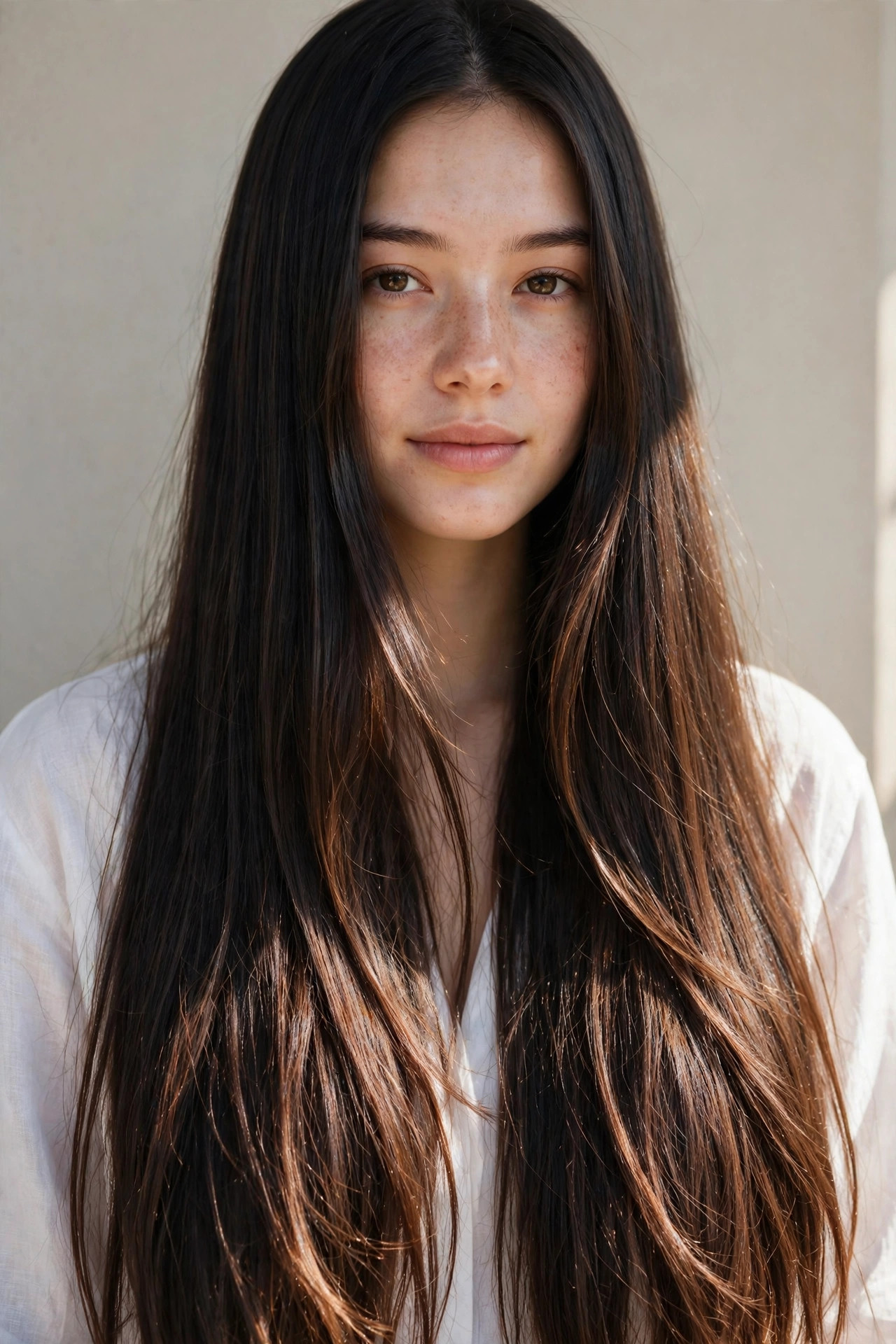
The darkest idea on this list that is still a color, not a solid: near-black hair with warm chocolate tones woven through it, visible in sunlight and quiet indoors. It is the winter dark for people who find flat black too harsh — the chocolate softens the edge without lightening the overall effect.
Who it suits: Deep skin tones and naturally black or very dark brown hair, where the chocolate can sit over the natural depth with little or no lightening. It also suits anyone who wants a dramatic change that still reads polished in formal or professional settings.
Styling tip: Keep the lengths smooth and the ends blunt. A sharp perimeter makes the black-to-chocolate shift look deliberate; wispy, uneven ends blur it.
Ask for: “Near-black hair with warm chocolate dimension through the lengths — dark first, chocolate second, blended with no line.”
10. Toasty Pink with Dark Roots
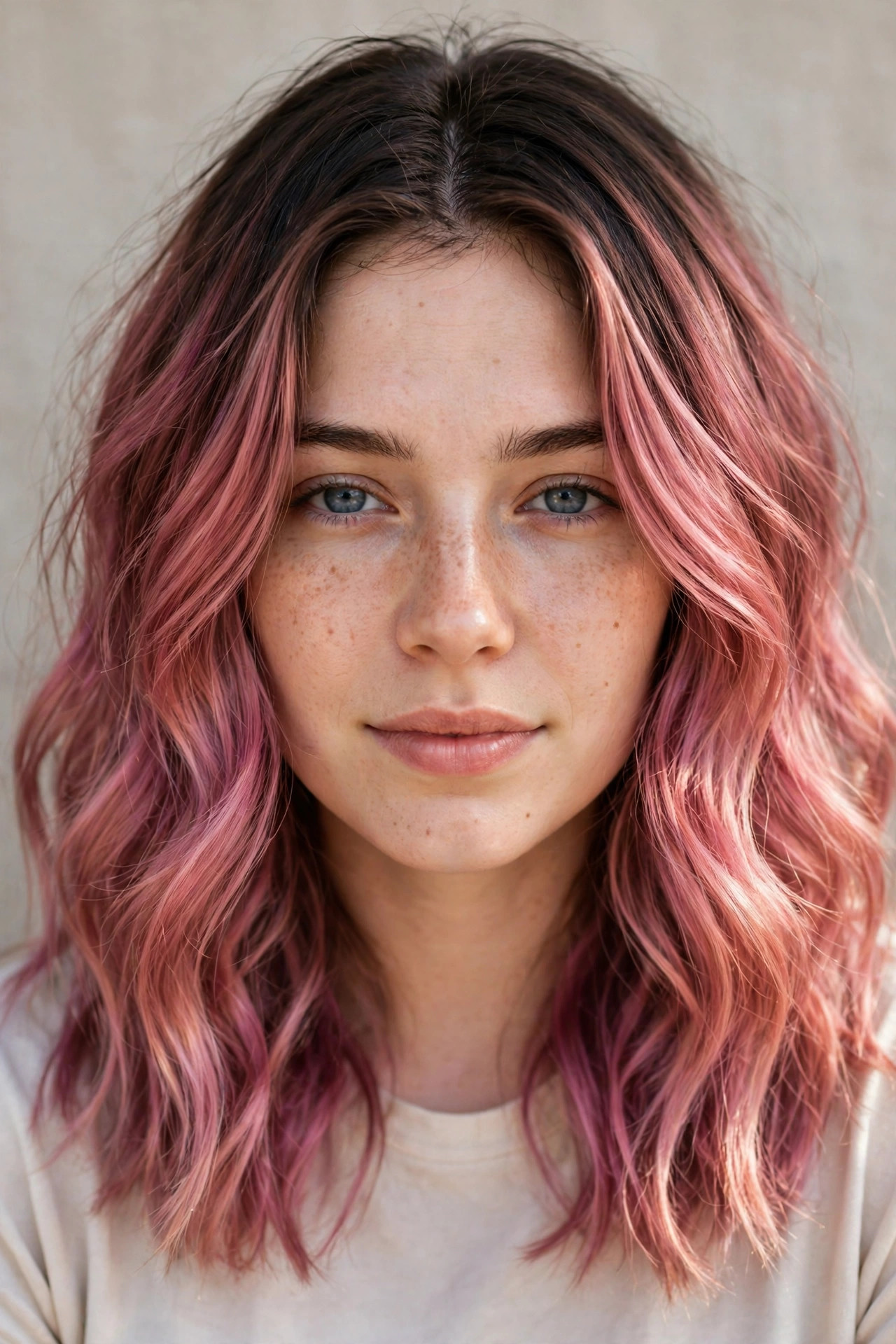
A warm mauve-pink balayage over dark roots — the pink is toasted, not bubblegum, so it reads as a warm winter pastel rather than a summer fashion color. The dark roots do two jobs: they make the pink look intentional, and they make the grow-out painless.
Who it suits: Fair to medium skin with warm or neutral undertones, and medium-length hair, where the pink has room to graduate from the dark roots. It is a good first fashion color, because the dark roots keep it grounded.
Styling tip: This color can fade quickly, so wash in cooler water and use a color-safe, sulfate-free shampoo and conditioner. Washing with hot water lets the pink escape faster.
Ask for: “A toasty pink balayage over dark roots — warm mauve-pink, not bright pink, with a soft melt from the roots.”
11. Black and White Money Piece
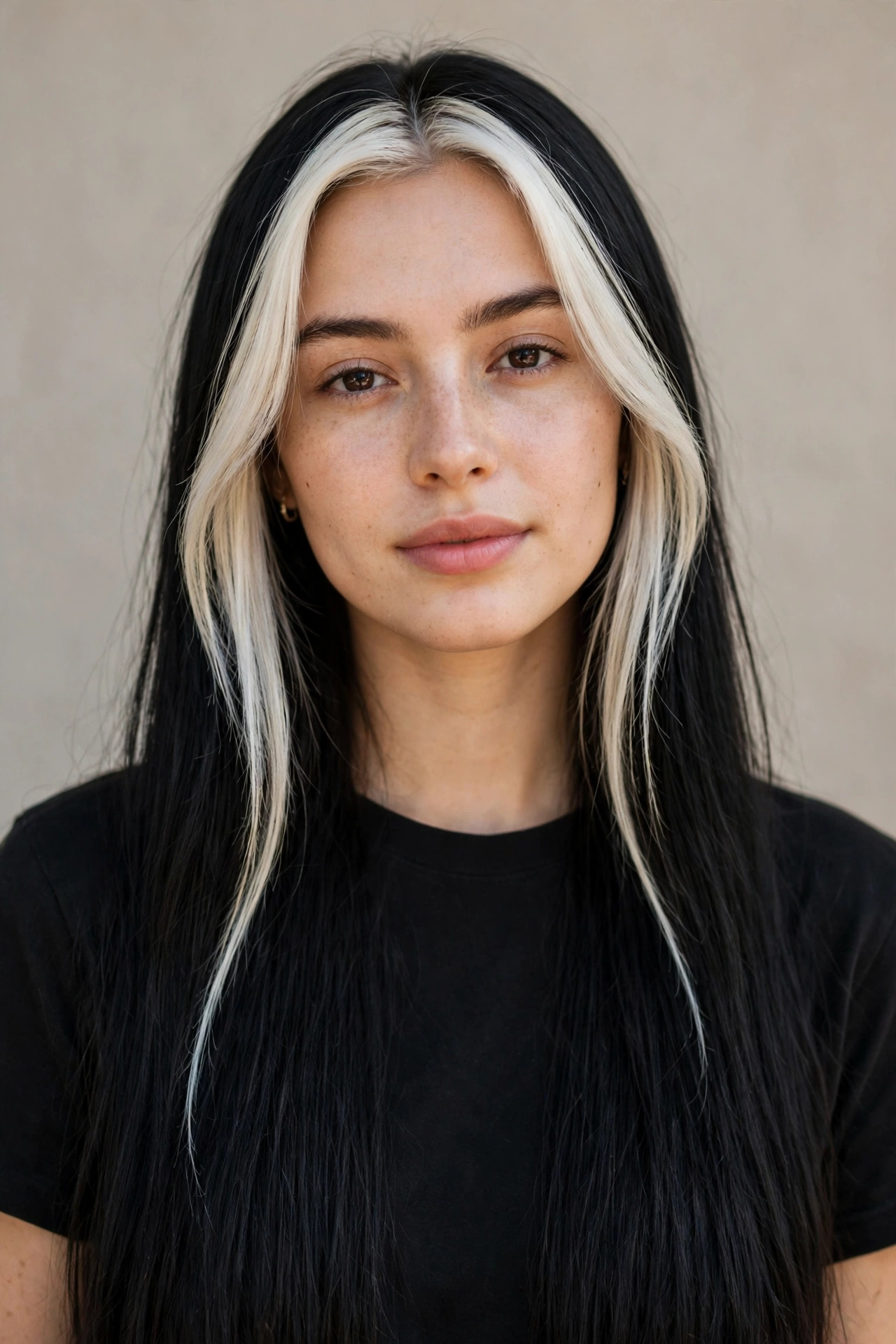
The highest-contrast idea on this list: jet-black lengths with two bold, icy white-blonde strands framing the face. The money piece is built with color-blocking — a clean, deliberate panel of light against the dark — and toned with an icy gloss so the white reads as frost, not yellow.
Who it suits: Anyone who loves a statement and has the patience for the upkeep: the white strands need regular toning to stay icy. It suits dark hair best, because the contrast is the whole point, and straight or wavy long hair, where the strands fall cleanly.
Styling tip: The white strands are the feature, so keep them forward. A centre part shows both strands equally; a deep side part hides one and the effect halves.
Ask for: “A black base with a bold white-blonde money piece — clean color-blocking, icy toned, no yellow in the white.”
12. Dimensional Cobalt Blue
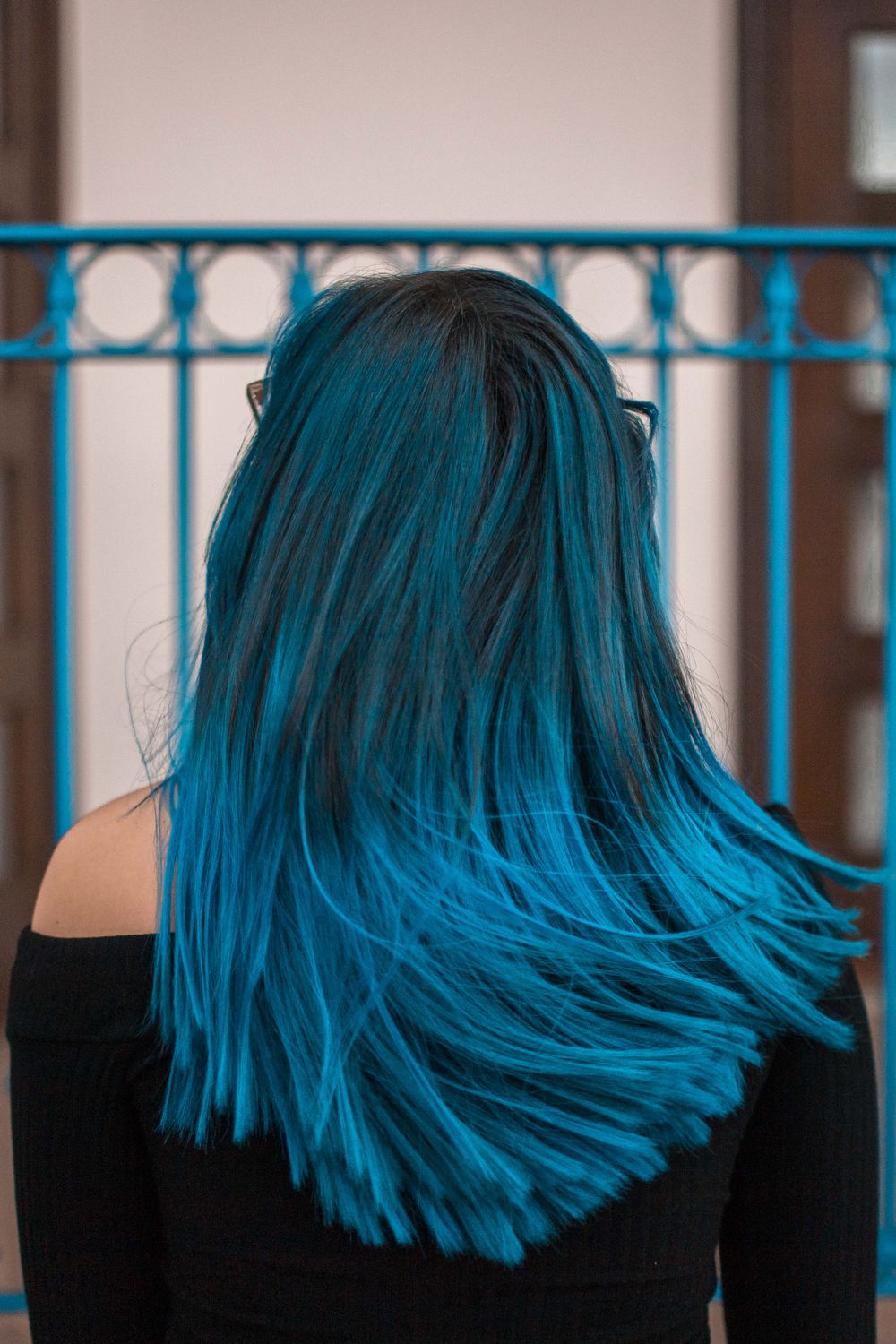
Cobalt is winter’s boldest blue: a deep, saturated, icy blue with dimension through the lengths, darker at the roots and brighter toward the ends. It reads as glamorous and fun in daylight and almost black-blue indoors, which is why it works as a winter color rather than a summer one.
Who it suits: Fair to medium skin with cool undertones, and anyone willing to maintain a fashion color. It suits long and medium hair best, because the dimension needs length to show.
Styling tip: Blue fashion color tends to fade, and as it fades it can shift toward green, so expect frequent touch-ups to keep the tone true. A color-depositing conditioner in a blue shade, used every few washes according to the product’s directions, helps hold the cobalt between appointments.
Ask for: “A dimensional cobalt blue — deep saturated blue with dimension, darker at the roots, no turquoise or green cast.”
13. Winter Navy and Purple
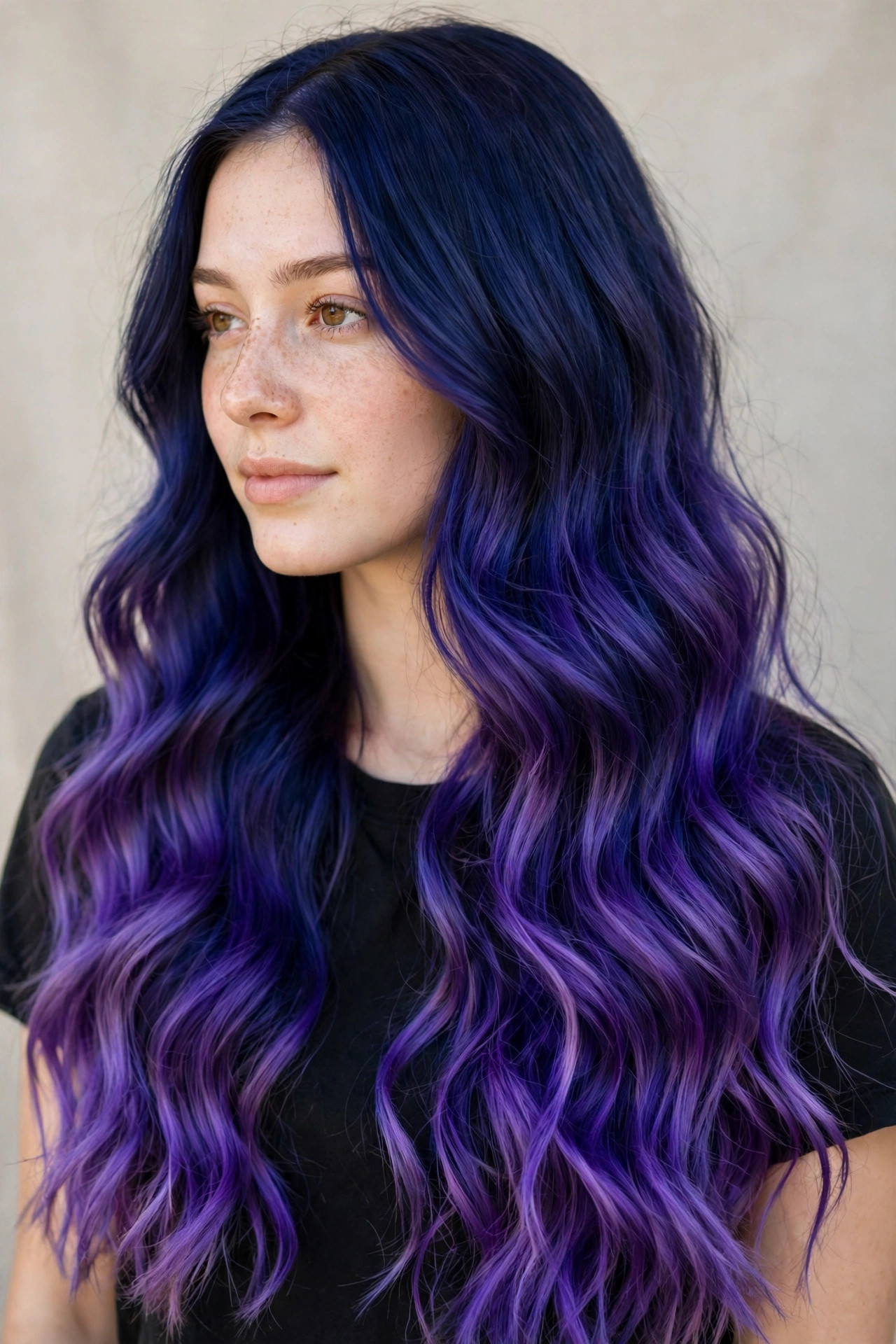
Navy and purple melted together: a deep navy base with rich violet-purple lengths, the two tones blurring into each other with no line. It is the darkest fashion color on this list — it reads as almost-black indoors and reveals its blue-purple depth in light, which makes it the most wearable bold option here.
Who it suits: Deep and medium skin tones, where the dark depth looks rich rather than heavy, and long hair, where the melt has room to graduate. It also suits anyone who wants a fashion color that still reads polished at work.
Styling tip: A smooth blow-dry shows the melt best. Heavy curling breaks the navy-to-purple gradient into pieces and the blend is lost.
Ask for: “A navy-to-purple color melt — deep navy roots melting into rich violet-purple lengths, a wide transition zone, no hard line.”
14. Evergreen
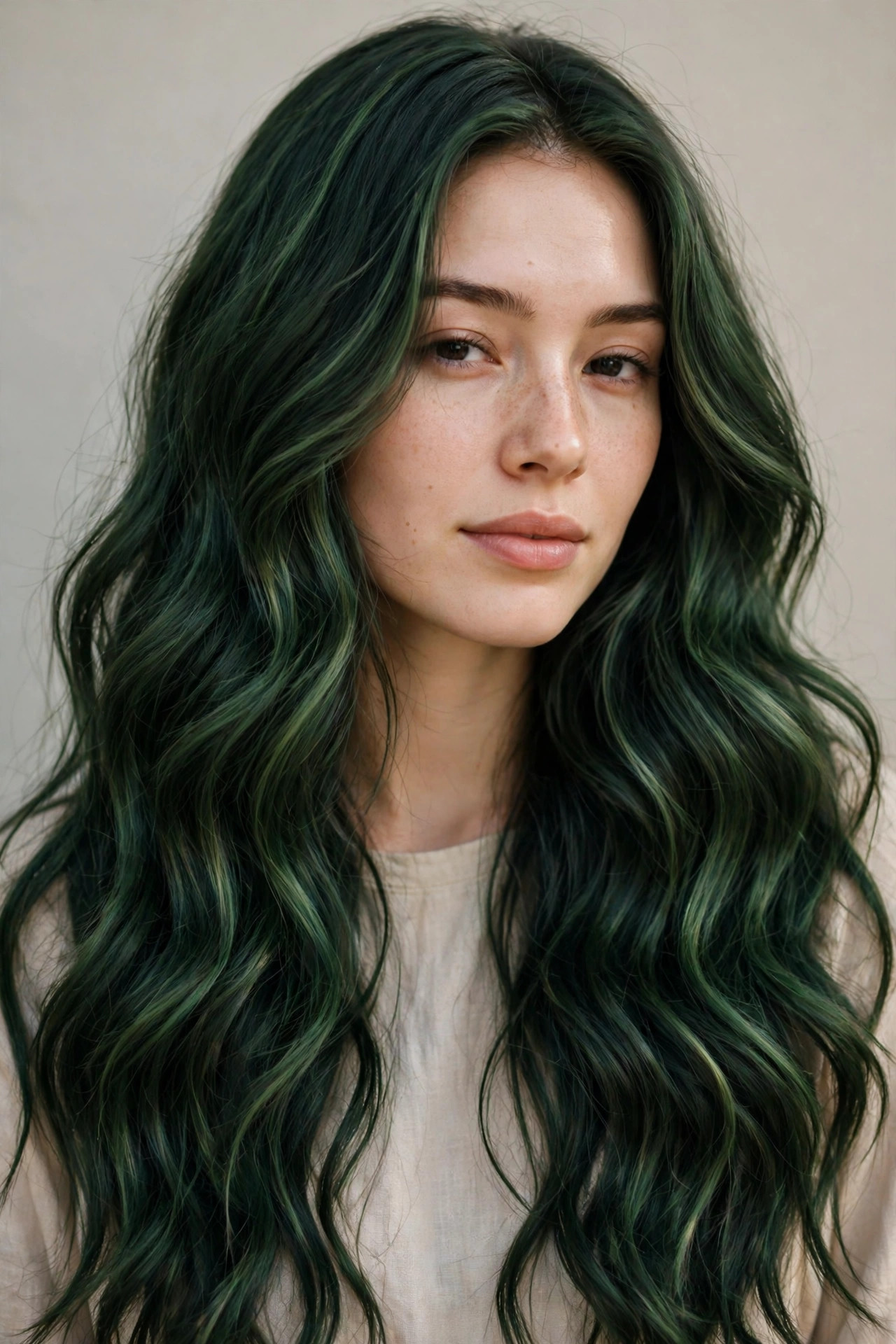
Evergreen is exactly what it sounds like: a deep forest green with lighter green dimension through the lengths, like pine in snow. It is the most unusual color on this list and the most seasonal — it reads as winter itself, and it photographs with extraordinary depth because the green tones sit quietly in shadow and come forward in light.
Who it suits: Fair to medium skin with cool or neutral undertones, and anyone who wants a fashion color that still feels like a color rather than a costume. It suits wavy hair well, because the wave pattern breaks the light into soft patches that suit the blend.
Styling tip: Green fashion color can fade unevenly, so a color-depositing conditioner in a green shade, used every few washes according to the product’s directions, keeps the tone even rather than patchy.
Ask for: “A deep evergreen green with lighter green dimension — forest green, not bright or neon, blended with no lines.”
15. Smoked Rose Gold
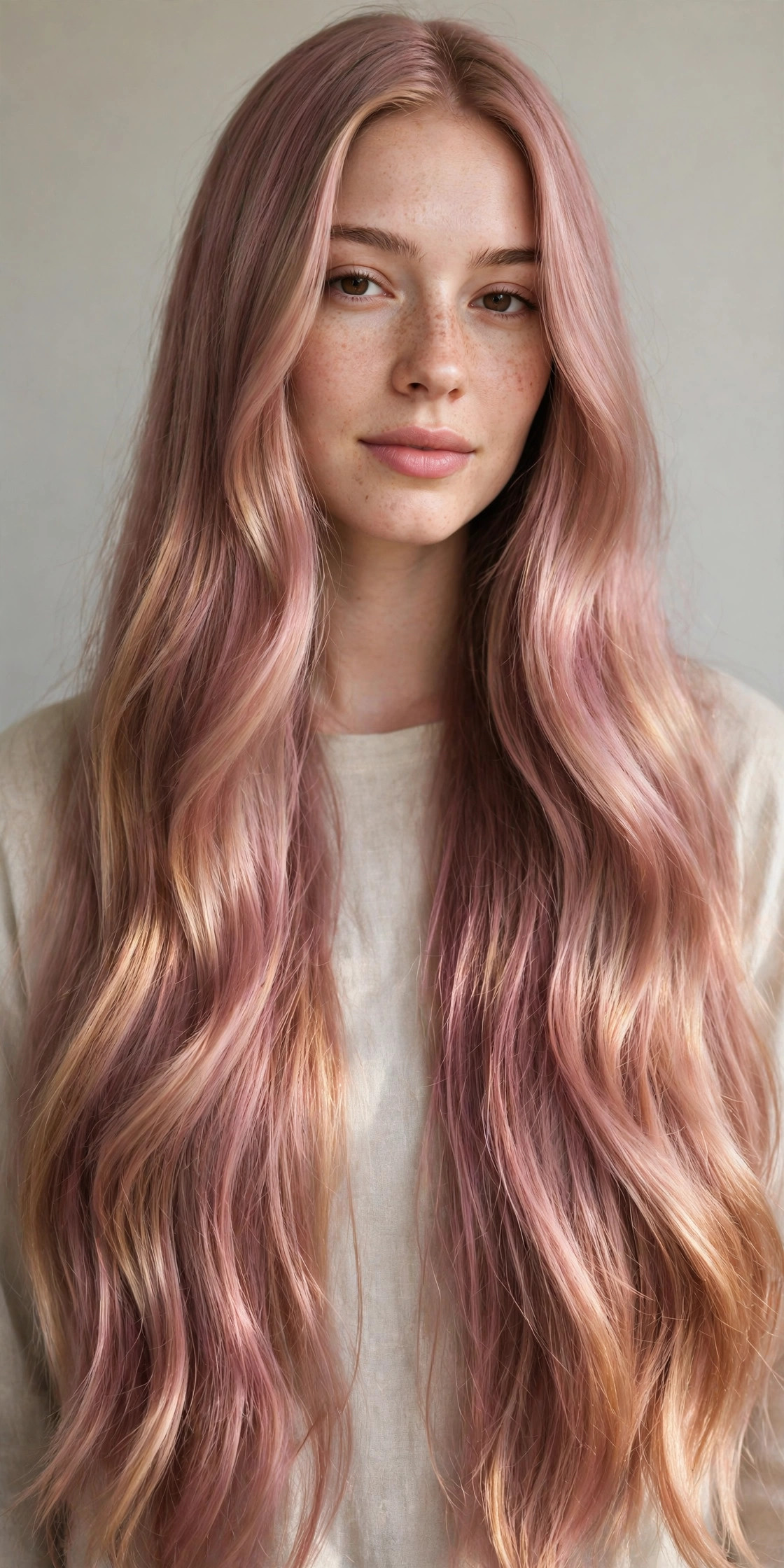
Smoked rose gold is rose gold with the sweetness turned down: a smoky, metallic pink-gold with a muted, almost dusty finish. It is the softest bold color on this list — warm enough to flatter, cool enough to read as winter, and metallic enough to catch low light.
Who it suits: Fair to light-medium skin with warm or neutral undertones, and anyone who found plain rose gold too sweet or too pink. It suits smooth, straight finishes best, because the metallic shine needs a clean surface.
Styling tip: Shine sprays and glossing treatments suit this shade — the whole point of smoked rose gold is its metallic reflectivity, and dull rose gold just looks brown-pink.
Ask for: “A smoked rose gold — muted metallic pink-gold, smoky rather than sweet, blended with no harsh highlights.”
How to keep winter color rich in cold weather
Winter is hard on colored hair: cold air outside, dry heated air inside, and hot showers in between. What helps, in order of effect:
- Wash less often, and cooler. Warm water and frequent washing open the hair’s surface and let color molecules escape faster. Cooler water and fewer washes slow that down; dry shampoo between washes can help some hair types, though it does not suit everyone.
- Condition more than in summer. Cold air and indoor heating dry hair out, and dry hair holds color unevenly. A weekly conditioning mask, left on for the time the product directs, helps the color fade evenly rather than patchily.
- Refresh the tone, don’t just wait. A color-depositing conditioner in a matching shade, used every few washes according to the product’s directions, tops the tone up between salon visits. A salon gloss every few weeks does the same job more evenly.
- Protect against heat and sun. Heat protectant before hot tools, and a hat in strong winter sun, can slow fading — they do not stop it entirely. A hat also protects the hair itself from cold wind, which can make ends brittle.
- Book the gloss before the color looks tired. For reds, violets, and fashion colors, a gloss refresh at the halfway mark between full appointments keeps the tone rich for a fraction of a full color service.
For the wider routine behind these points, our hair care tips for healthy hair guide covers washing, heat, and conditioning in more detail.
FAQs
What winter hair color suits fair skin?
Fair skin usually suits the icy and jewel shades best: icy platinum, pale violet ash, mulled wine, and berry red all make fair skin look luminous rather than washed out. If your skin has pink undertones, lean toward the cooler reds (mulled wine, berry) rather than the warmest ones, and ask your colorist to check the shade against your skin in daylight, not salon lighting.
Do I need bleach for icy platinum or silver?
It depends on your starting color. Light blonde hair can often reach icy platinum or silver with a toner and little or no bleach. Medium brown and darker hair usually needs lightening first, because the icy tone only shows truly once the hair is light enough to hold it. Previously colored hair, very dark hair, and hair that has been lightened before all change the answer, so a strand test at the salon is the honest way to know before committing.
How long do winter fashion colors (blue, green, purple) last?
There is no fixed answer, because fading depends on the shade, the formula, the hair’s porosity, how often it is washed, and the products used. As a rough guide, the tone usually looks freshest for the first few weeks and then softens gradually; vivid blues and greens tend to soften faster than deep reds and darks. A gloss refresh or a color-depositing conditioner every few weeks, used as directed, extends the fresh look. When the color starts telling a different story than the one you asked for — blue drifting green, for example — it is time for a salon visit rather than another at-home top-up.
Can I go darker for winter without a big commitment?
Yes. A sheer gloss in a deep brown, wine, or chocolate tone adds depth and shine without changing the base shade, and it washes out gradually over several weeks depending on washing habits. A demi-permanent color in a winter dark is the next step up: deeper than a gloss, still not permanent. Both are good ways to try a winter dark before committing to a full color service.
What is the lowest-maintenance winter hair color?
The shades built with a soft root and a gradual placement: dark crimson balayage (#7), black with chocolate (#9), and toasty pink with dark roots (#10). All three are designed to grow out without a hard line, so the gap between appointments can stretch to 10–12 weeks with a gloss refresh in between. The highest-maintenance are the icy blondes and the white money piece, which need regular toning to stay cool.
The Bottom Line
Winter 2026’s message is simple: let the season do the choosing. Icy platinum and silver suit the frost, deep wines and crimson suit the long evenings, and the darks and bold blues suit anyone who wants winter to feel like a statement. Pick the shade by undertone, the placement by how often you want to be in the salon chair, and the care by how your hair actually behaves in cold weather. Save the shade you love, show it to your colorist, and ask what maintenance it really needs before you commit.
📌 Loved this? Save it to your winter hair board on Pinterest and share it with a friend who’s overdue for a seasonal refresh. For more color inspiration, check out our 15 velvet hair color ideas and our 22 stunning balayage ideas for 2026.


