15 Stunning Wolf Haircut Ideas for a Bold, Edgy Look (2026 Guide)
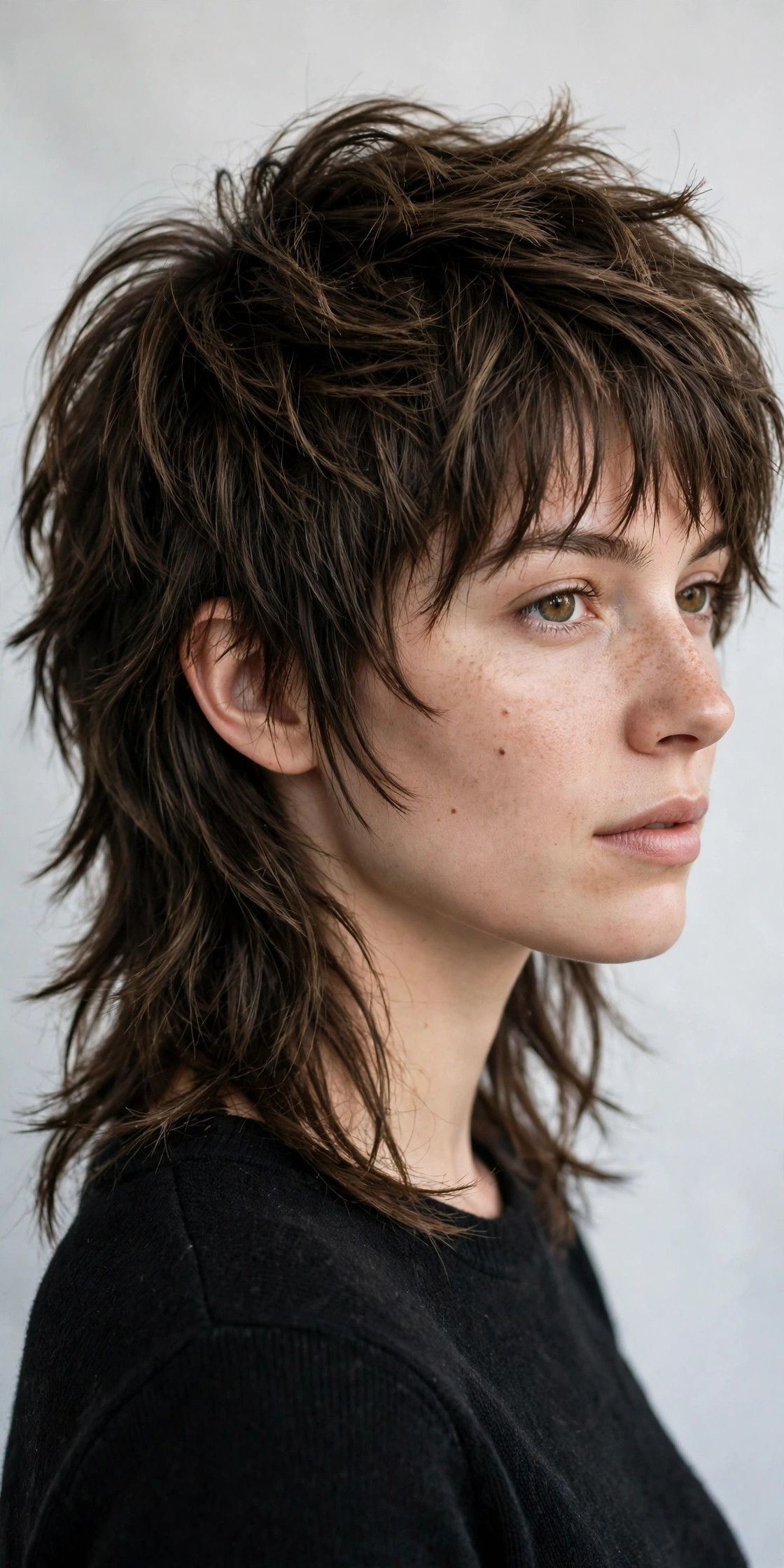
There is a special kind of haircut that does half your styling for you — the kind where you roll out of bed, shake your head, and the layers fall exactly where they are supposed to. The wolf cut is that haircut. It is the wilder sibling of the shag: short, choppy layers packed into the crown for big, touchable volume on top, with longer textured pieces falling through the back for that undone, lived-in finish.
Below are 15 wolf haircut ideas organised by hair type and length, each with honest guidance on who it suits and a styling tip you can actually use. Take your favourite to the salon — and take the “what to ask for” line with it.
Quick Answer
A wolf haircut blends short, choppy crown layers (volume on top) with longer textured lengths through the back (movement and edge). It suits thick, wavy, and curly hair especially well, flatters oval, round, heart, and square faces when the face-framing pieces are placed correctly, and is famously low-maintenance — most versions look best with air-drying and a little texturising product.
What makes it a wolf cut (and not a shag)?
Both cuts use choppy layers, but the distribution is different. A shag spreads the layers fairly evenly from crown to ends for an all-over textured shape. A wolf cut is top-heavy: the shortest layers sit high on the head to build volume where flat hair needs it most, while the back keeps its length in longer, piecey sections — the mullet influence. If you want even, all-over texture, the softer option is our shag haircuts for women guide. If you want drama on top and length at the back, you are in the right place.
1. The Classic Mid-Length Wolf
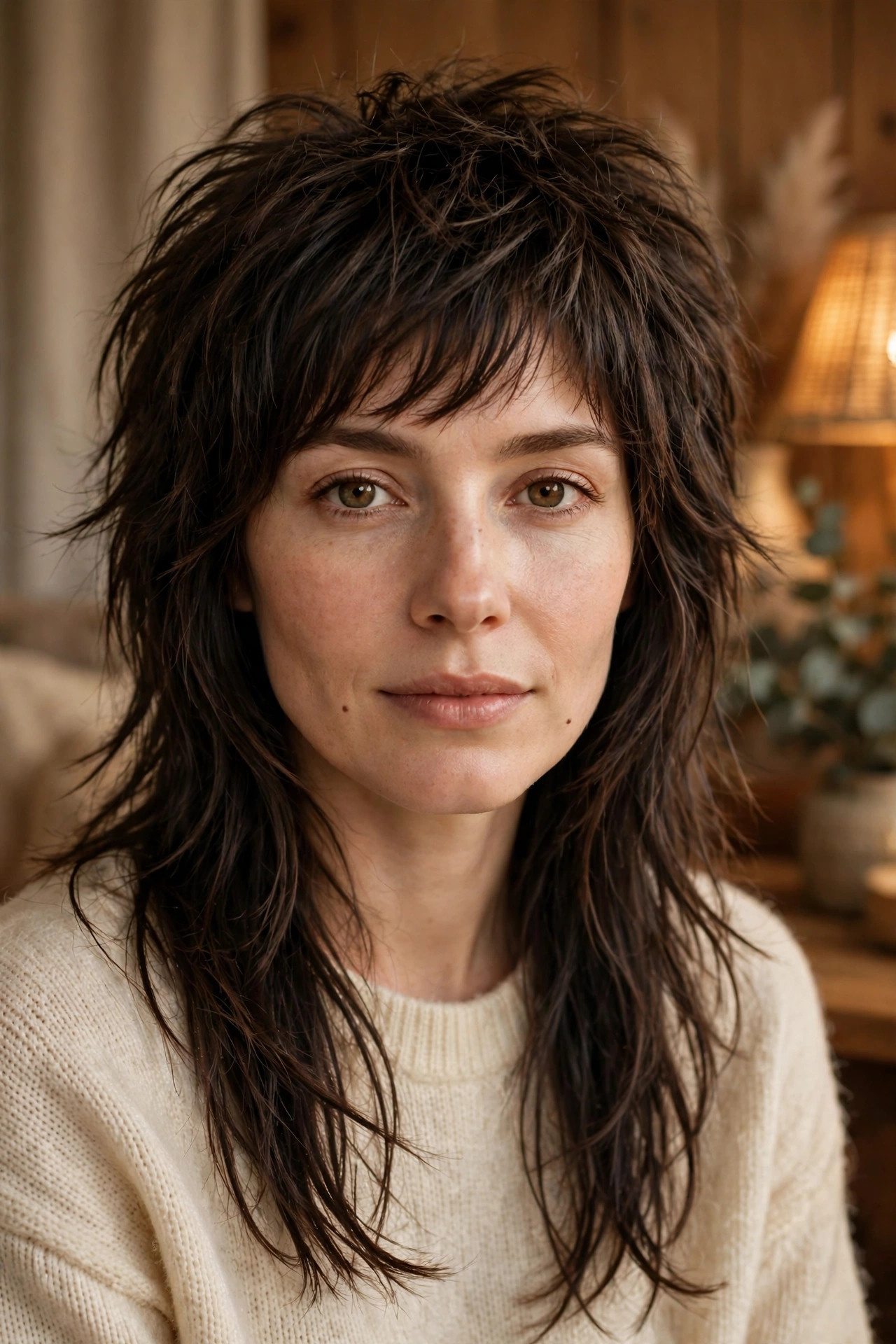
The blueprint everything else on this list is built from. Collarbone-length hair with short, choppy layers stacked through the crown and longer, feathered pieces falling past the shoulders. The contrast between the full top and the wispy back is what gives the wolf its signature silhouette. Who it suits: medium to thick hair; oval, heart, and square faces. What to ask for: “short choppy layers on top, keep the length in the back, lots of texture.” Styling tip: apply mousse to damp roots, flip your head upside down to blow-dry, and finish with a pea-sized amount of texturising paste scrunched into the ends.
2. Wolf Cut with Curtain Bangs
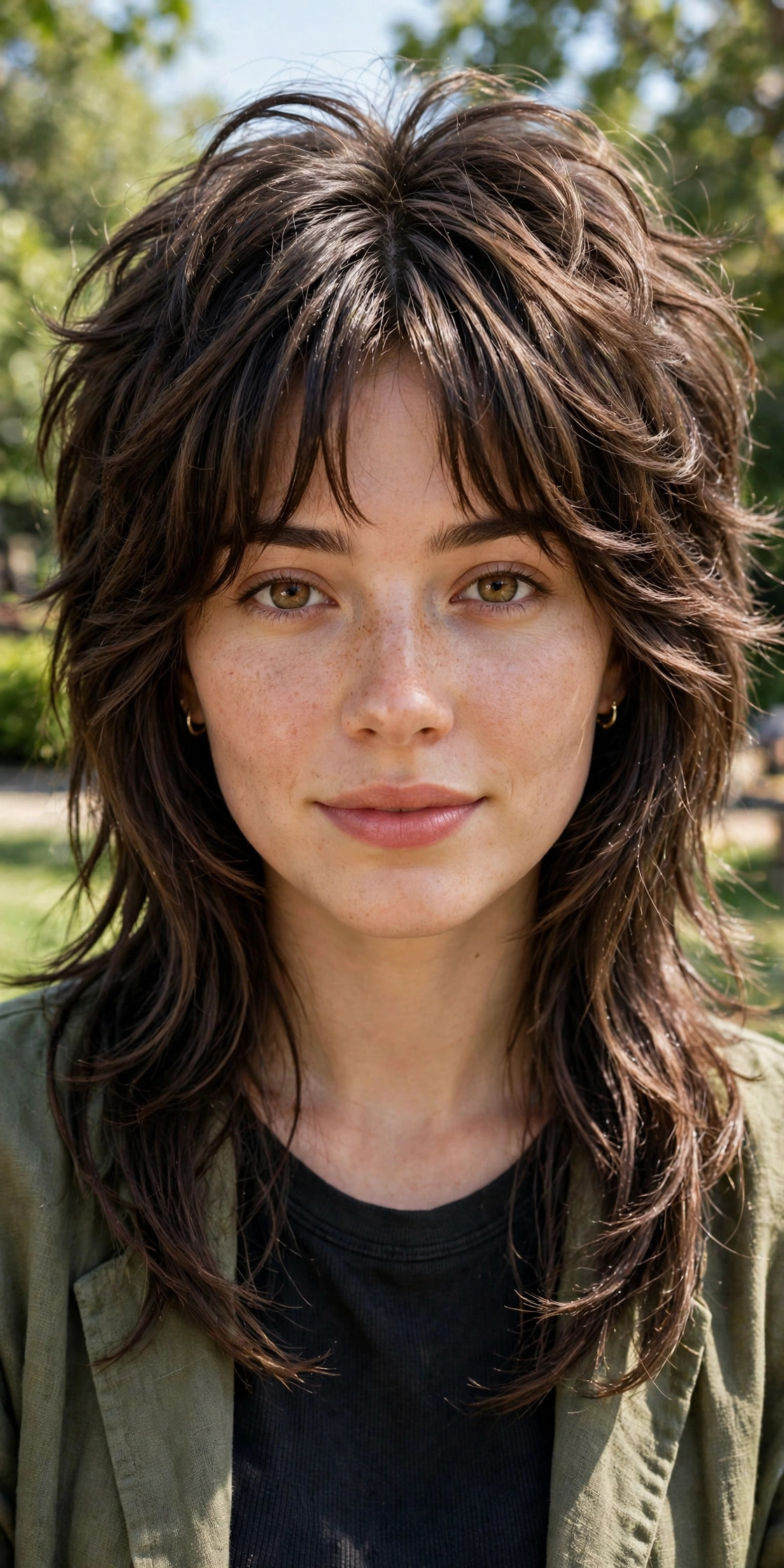
Curtain bangs were practically made for this cut. They melt into the wolf’s face-framing layers so the front reads as one continuous, swoopy shape instead of bangs-plus-haircut — and they soften the cut’s edge just enough for everyday wear. Who it suits: round and square faces (the parted fringe opens up the face); medium to long hair. What to ask for: curtain bangs that blend into the shortest face-framing layers. Styling tip: blow-dry the bangs with a round brush, flicking them outward, then let the rest air-dry for contrast. Our curtain bangs guide has more face-shape pairings.
3. Curly Wolf Cut

This might be the wolf cut’s best natural partner. Curls already give you the volume on top the cut is built for, and the long textured back keeps curls from turning into a triangle — the layers remove bulk exactly where curly hair gets wide. Who it suits: 2B to 3C curl patterns; anyone whose curls need shape, not just length. What to ask for: a dry cut (so the stylist sees your real curl pattern), short crown layers, and long layers through the back — no blunt bottom edge. Styling tip: scrunch curl cream into soaking-wet hair, then diffuse on low heat or air-dry; avoid brushing dry curls, which flattens the top volume this cut depends on.
4. Pixie-Wolf Hybrid
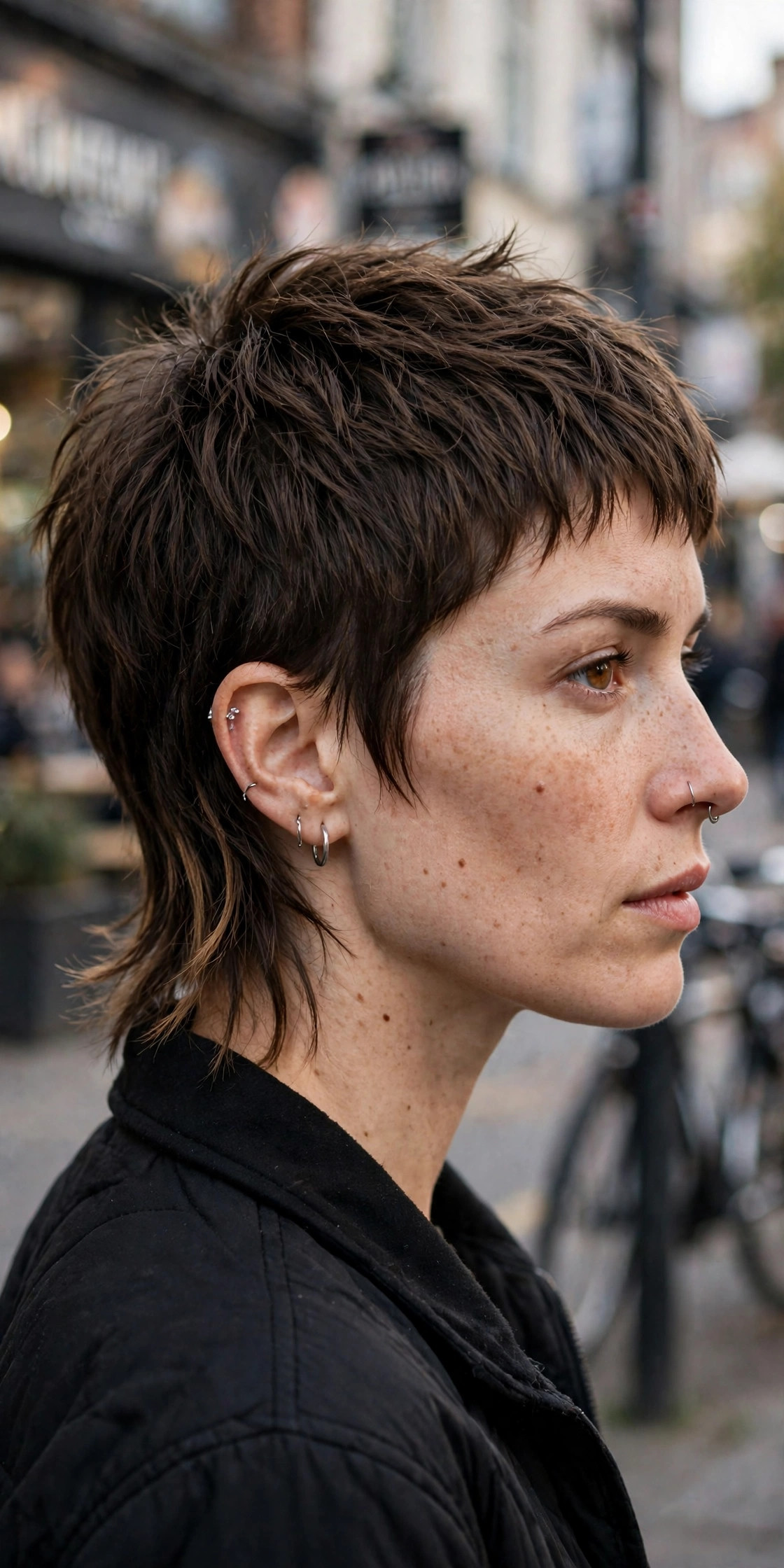
For commitment-phobes who want the edge without the length. Everything above the ears is pure pixie — short, choppy, piecey — while the back keeps a few inches of textured length so the wolf silhouette still reads. It is the boldest version on this list and also the lowest-maintenance. Who it suits: fine to medium hair (short layers create fullness); oval and heart faces. If you like short-and-edgy but want the nape covered, compare with our bixie haircut ideas. What to ask for: “pixie on top and sides, textured length left at the nape.” Styling tip: a dab of matte paste on dry hair, worked through with fingertips — thirty seconds and you are done.
5. Long Wolf Cut
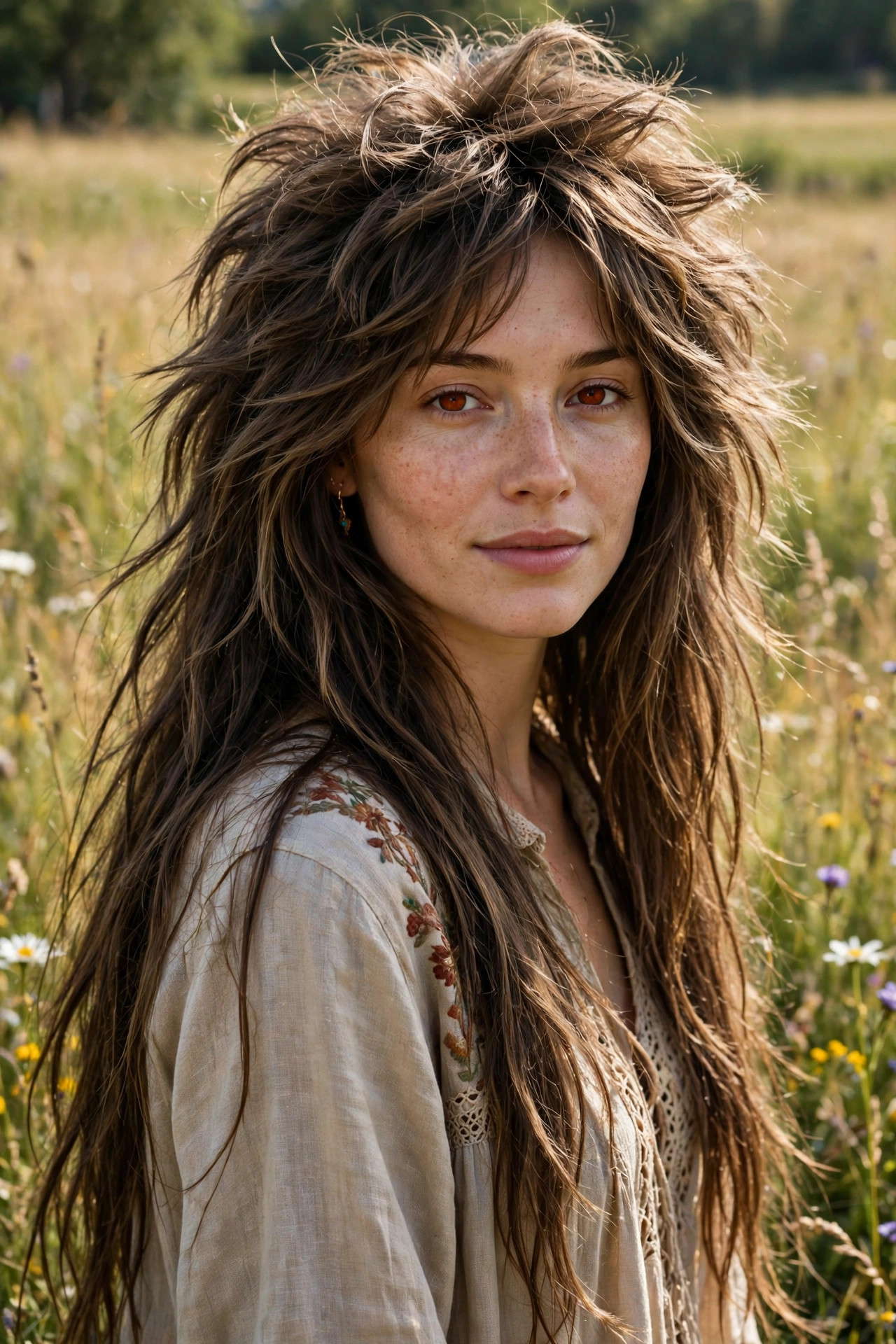
Proof the wolf is not only a short-haircut story. With hair past the shoulders, the choppy crown layers create a waterfall of volume up top while the long back keeps its bohemian length — think rock-star texture rather than mullet shock. Who it suits: thick or wavy hair that can hold the layer separation; long faces (the width on top balances length). What to ask for: “keep my length, but give me short disconnected layers on top.” Styling tip: braid damp hair loosely overnight for heat-free waves that make the layers pop by morning.
6. Wolf Cut for Thick Hair
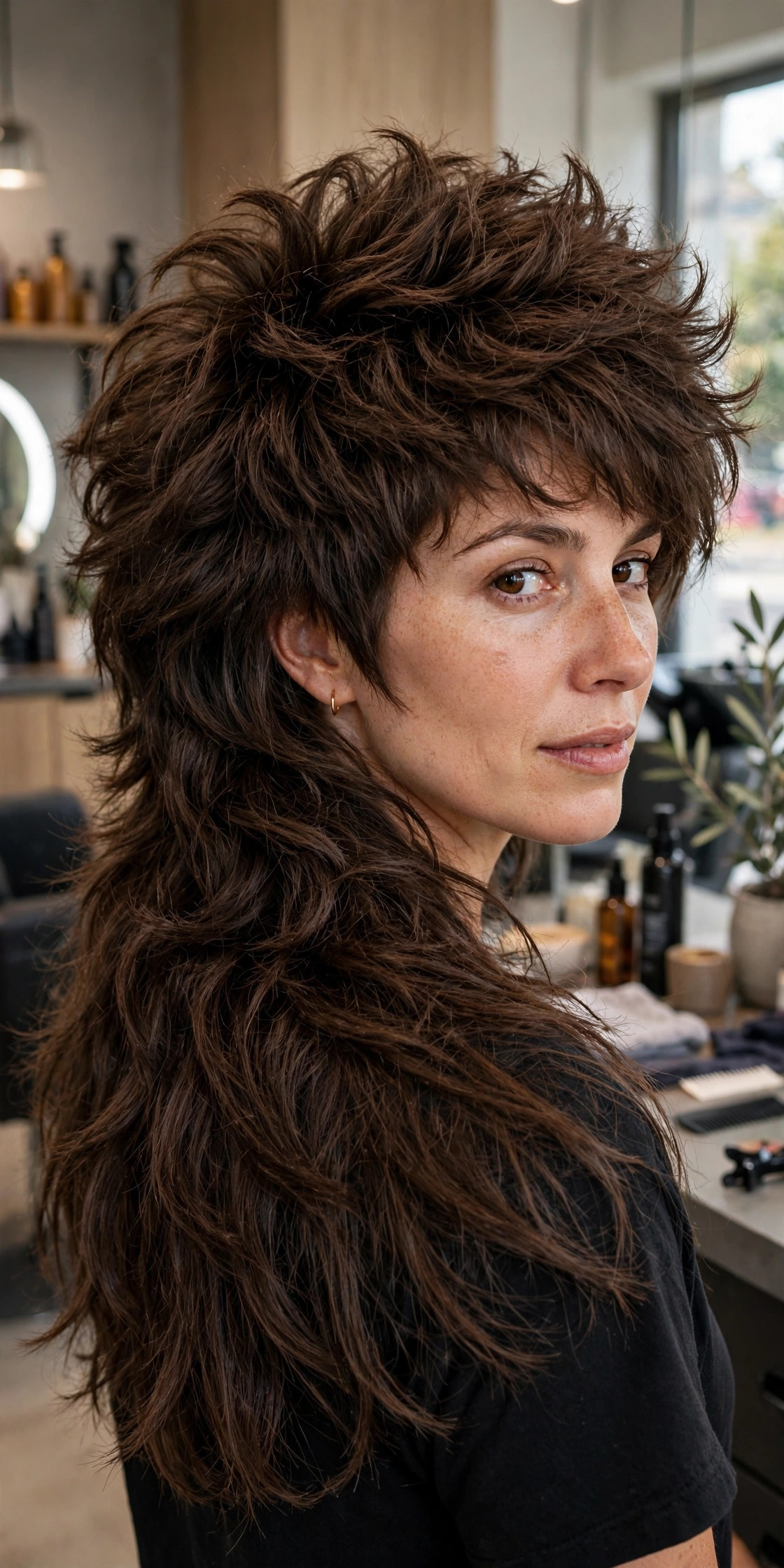
Thick hair and wolf cuts are a natural match — the cut was practically designed to remove the exact bulk that makes thick hair sit like a helmet. Heavy interior layering takes the weight out of the crown while the textured back keeps movement. Who it suits: dense, coarse, or very thick hair of any pattern. What to ask for: “take the weight out with interior layers, keep the perimeter textured not blunt.” Styling tip: this is the one version where a smoothing serum on the mid-lengths helps — it keeps the top voluminous and the back sleek rather than poufy. Maintenance note: thick hair may need the crown re-texturised every 8–10 weeks as it grows out, depending on how fast your hair grows.
7. Wispy Wolf for Fine Hair

Fine hair can wear the wolf too — the trick is keeping the layers wispy rather than chunky so you don’t remove what little density there is. Shorter overall length with feathered, point-cut ends creates the illusion of fullness on top. Who it suits: fine or thin hair; petite features (the cut won’t overwhelm). What to ask for: “wispy layers, point-cut ends, nothing too chunky or disconnected.” Styling tip: volumising mousse at the roots before blow-drying upside down is non-negotiable here — it is what fakes the density. Avoid heavy oils, which can flatten fine hair.
8. Wavy Wolf with Face-Framing Layers

The most wearable, least intimidating entry point. Natural waves plus the wolf’s signature face-framing pieces give you movement and shape with almost no styling — the waves do the texturising work the cut needs. Who it suits: 2A–2C waves; anyone trying the wolf for the first time. What to ask for: “long wolf layers with face-framing pieces starting at the cheekbones.” Styling tip: salt spray on damp hair, scrunch, air-dry. That is genuinely the whole routine.
9. Wolf Cut with Blunt Micro Bangs
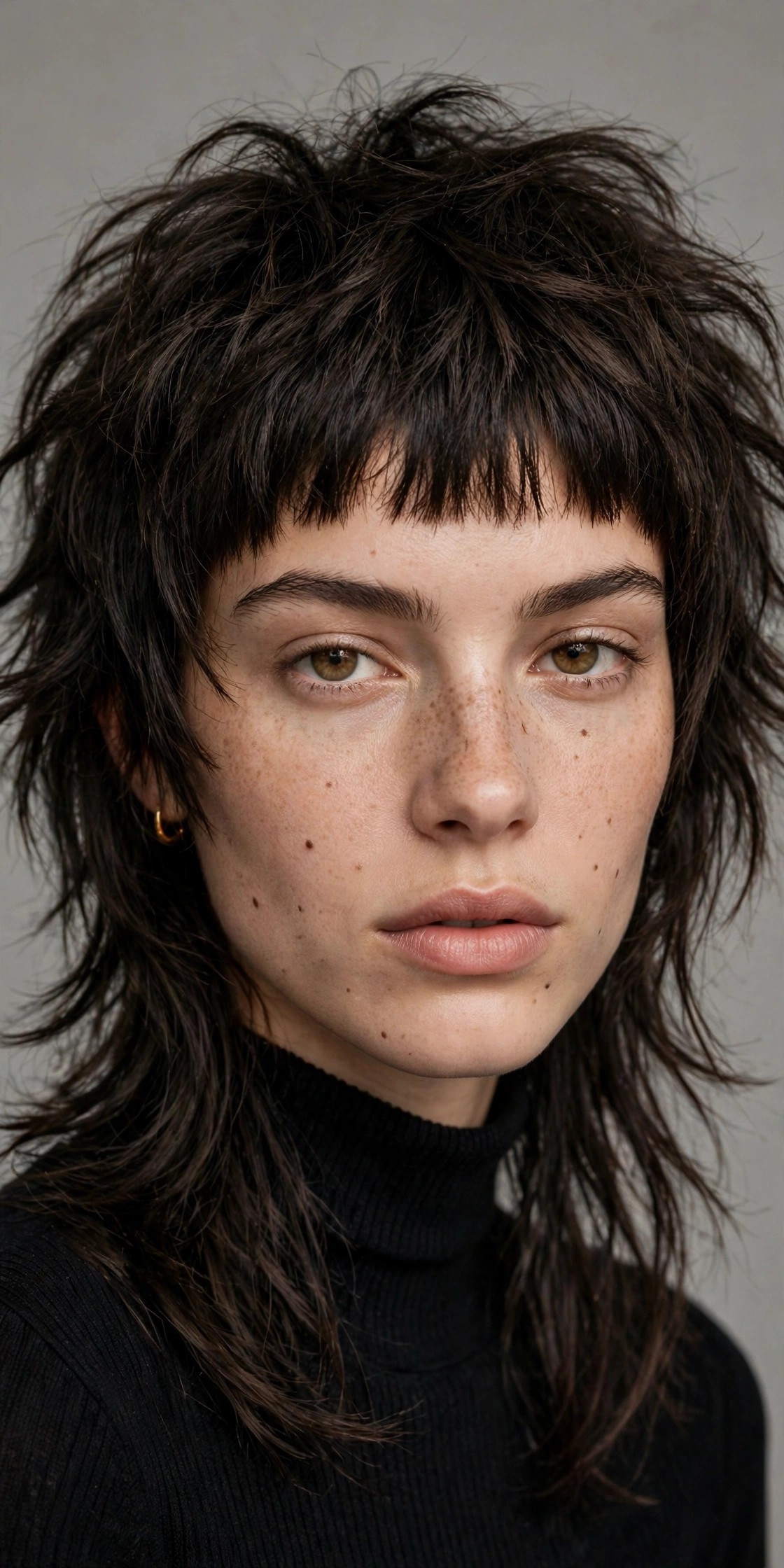
The fashion-forward option. A short, straight-across micro fringe against the wolf’s wild layers creates a deliberate high-contrast look — graphic on top, undone everywhere else. It is not for the faint of heart, but it photographs incredibly well. Who it suits: oval and long faces (the horizontal line shortens visually); straight to slightly wavy hair. What to ask for: micro bangs cut just above the brows, blended at the temples into the wolf layers. Styling tip: keep the fringe sleek (a quick flat-iron pass) and the rest textured — the contrast is the point.
10. Shaggy Wolf Bob
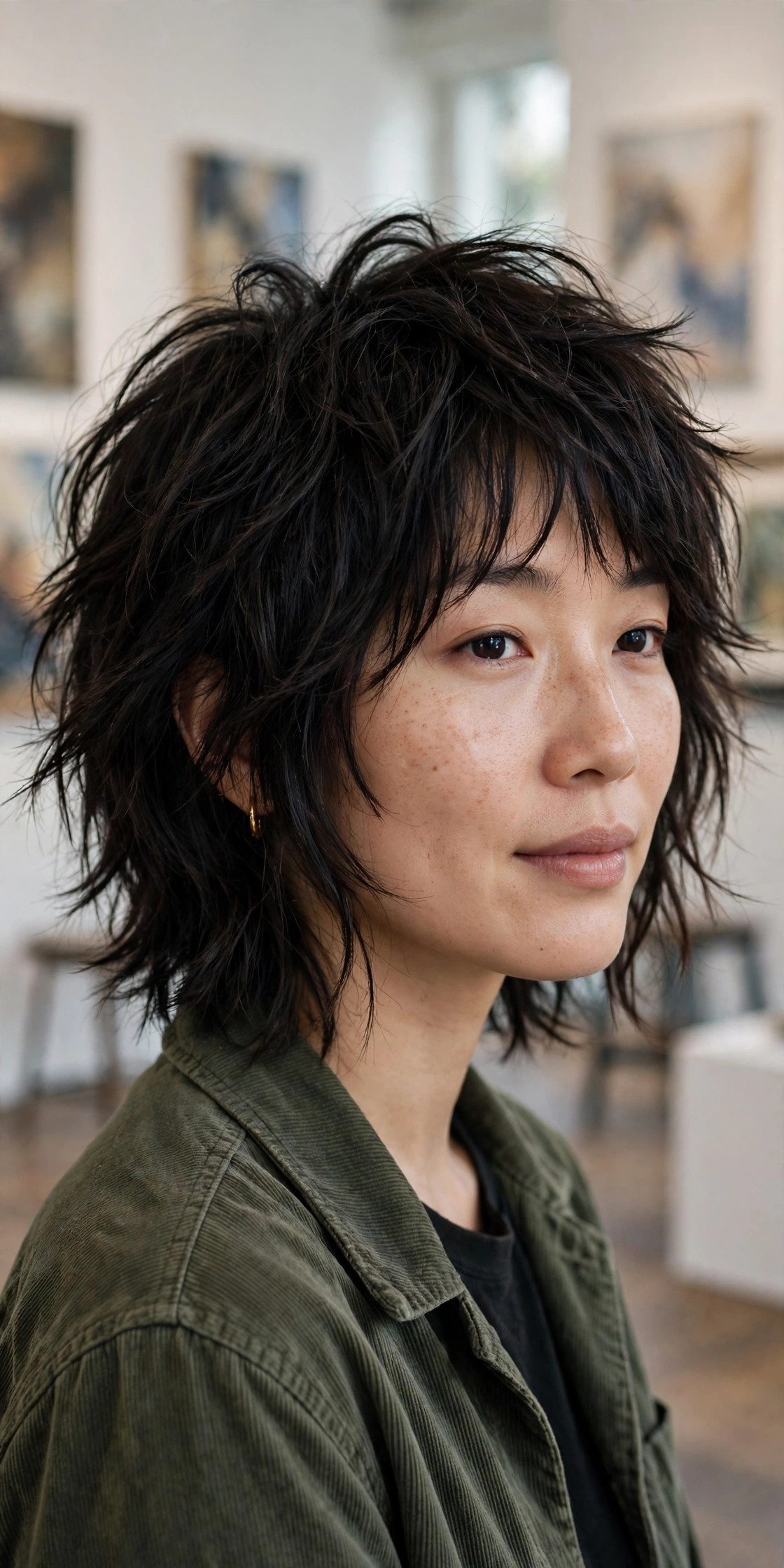
Chin-to-jaw length with the wolf’s DNA: choppy crown, textured perimeter, piecey ends. It reads as an edgy bob from the front and a mini-wolf from the back — a good compromise if you want short hair with more personality than a classic bob. Who it suits: fine to medium hair; oval, round, and heart faces. What to ask for: “a textured bob with short crown layers and a piecey, not blunt, bottom edge.” Styling tip: flat-iron bends (not full straightening) on random sections give the piecey separation that sells this cut.
11. Wolf Cut with Money-Piece Highlights

The cut does the shape; colour does the spotlight. A lighter face-framing “money piece” painted through the wolf’s front layers makes the choppy texture around the face impossible to miss — the layers catch light exactly where the colour sits. Who it suits: anyone growing out or refreshing colour; medium to dark base colours show the contrast best. What to ask for: balayage or foiled money piece focused on the face-framing layers, with the back kept softer. Colour note: lightened pieces tend to need more moisture than virgin hair, so a weekly mask keeps the texture looking piecey rather than dry — results depend on your hair’s condition and the formula used.
12. The Soft, Polished Wolf

The office-friendly wolf. Same top-heavy layering, but the ends are kept slightly fuller and the texture is refined rather than shredded — think blown-out volume instead of bedhead. It proves the cut’s architecture works even when the styling is neat. Who it suits: professional settings; straight to wavy hair that holds a blowout. What to ask for: “wolf layering but keep the ends fuller and the texture soft, not chunky.” Styling tip: round-brush blowout focusing lift at the crown, then a light-hold spray — the shape holds for days on second-day hair.
13. Wolf Cut for Round Faces
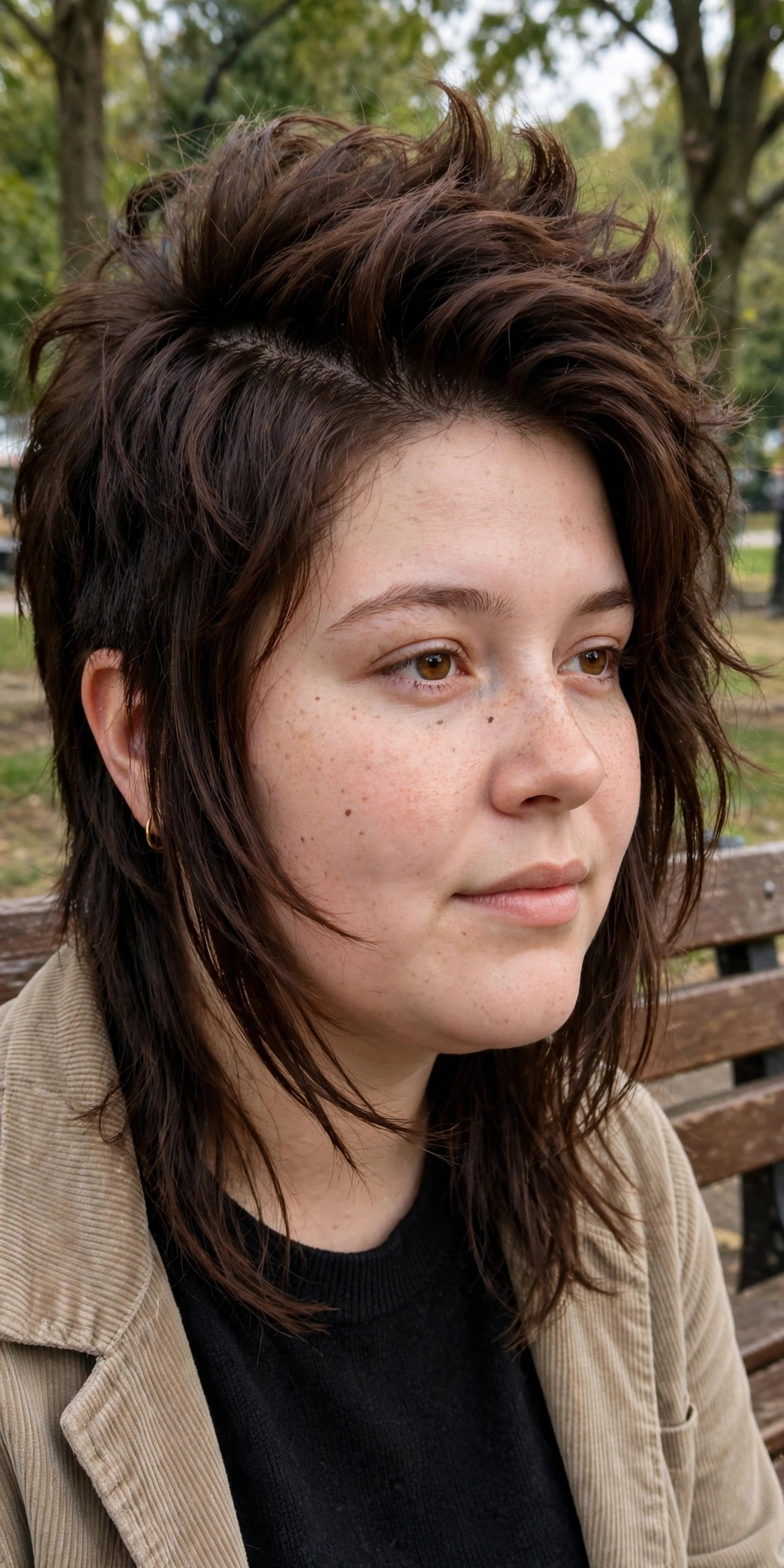
The right wolf flatters round faces beautifully — the key is where the shortest face-framing pieces land. Layers that start at or below the chin elongate the face; volume concentrated at the crown (not the sides) adds height. Who it suits: round and full faces; medium to long hair gives the stylist room to place the layers. What to ask for: “face-framing layers starting at the chin, volume on top, nothing wide at the cheeks.” Styling tip: a deep-ish side part shifts volume upward and breaks up facial symmetry in a flattering way.
14. Textured Wolf for Straight Hair

Straight hair shows every layer, which makes the wolf’s choppy texture look razor-sharp — in a good way. The cut gives pin-straight hair the piecey separation it usually lacks, and the silhouette stays crisp between washes. Who it suits: straight, medium-density hair; anyone who wants edge without curls or waves. What to ask for: “lots of point-cut texture so the layers separate on straight hair.” Styling tip: dry texturising spray is the hero product here — mist it into dry layers and shake. Straight hair typically needs the texture refreshed with product more often than wavy hair, which holds separation on its own.
15. The Grown-Out Wolf

The wolf cut’s best-kept secret: it grows out gracefully. Because the shape is built on texture rather than a precise perimeter, the grow-out phase just looks like a longer, softer wolf — not an awkward in-between cut. Plan a light reshape every 10–12 weeks (timing varies with how fast your hair grows) to keep the crown layers from merging into the back. Who it suits: anyone nervous about commitment; low-maintenance routines. What to ask for at the reshape: “clean up the crown layers and re-texturise the ends, keep the length.” Styling tip: as it grows, switch from paste to cream — heavier products weigh down longer layers.
How to ask your stylist for a wolf cut (exact wording)
Bring 2–3 photos of the same length as your hair — photos beat descriptions every time. Then use this sentence as your base: “I want short, choppy layers concentrated on the crown for volume, with longer textured length kept through the back — a wolf cut, not an even all-over shag.” Add your chosen variation (“with curtain bangs”, “adapted for my curls”, “kept soft and polished”). Ask how the layers will grow out on your hair type before the scissors come out.
Wolf cut maintenance, honestly
This is a low-effort cut but not a no-effort one. Most versions need a reshape every 8–12 weeks depending on your hair’s growth rate and how crisp you like the crown layers. Between cuts, the styling is minimal — the architecture does the work — but textured ends show dryness faster than blunt cuts, so keep up with conditioning if your hair is colour-treated or heat-styled regularly. A satin pillowcase reduces morning tangles in the longer back sections. None of this is complicated; it is just worth knowing before you commit.
FAQs
Is a wolf cut the same as a shag?
No, though they are related. A shag spreads choppy layers fairly evenly all over the head. A wolf cut concentrates the shortest layers on the crown for top volume and keeps longer, textured length through the back. The wolf is the edgier, more top-heavy of the two — our shag haircuts guide covers the softer option.
Does the wolf cut work on thin or fine hair?
It can, with the right approach. Ask for wispy, point-cut layers rather than chunky disconnected ones, keep the overall length shorter, and lean on volumising mousse at the roots. Very thin hair may suit the shaggy wolf bob (idea 10) better than the long version, since shorter layers create more visible fullness.
What face shape suits a wolf cut?
Most of them, because the cut is customisable. Oval faces can wear any version. Round faces do best with face-framing layers starting at or below the chin and volume on top (idea 13). Long faces benefit from the width the crown layers add. Square faces are softened by curtain bangs or curved face-framing pieces (idea 2). Bring face-shape concerns to your stylist — layer placement is adjustable.
How long does a wolf cut take to grow out?
Because the shape relies on texture rather than a precise outline, grow-out is forgiving — it gradually becomes a longer, softer wolf rather than an awkward stage. Most people get a light reshape every 8–12 weeks, though timing depends on your hair’s growth rate and how defined you like the crown.
Can I get a wolf cut with curly hair?
Yes — curls are one of the best textures for it (idea 3). Ask for a dry cut so the stylist works with your real curl pattern, and make sure the bottom edge is layered rather than blunt so the shape stays balanced as it grows.
Final word
The wolf cut earns its reputation: it is one of the few statement haircuts that is genuinely easy to live with. Pick the version that matches your texture and the amount of edge you want, take the exact wording to your stylist, and let the layers do the talking.


