15 Velvet Hair Color Ideas for a Rich, Dimensional Look
15 Velvet Hair Color Ideas for a Rich, Dimensional Look
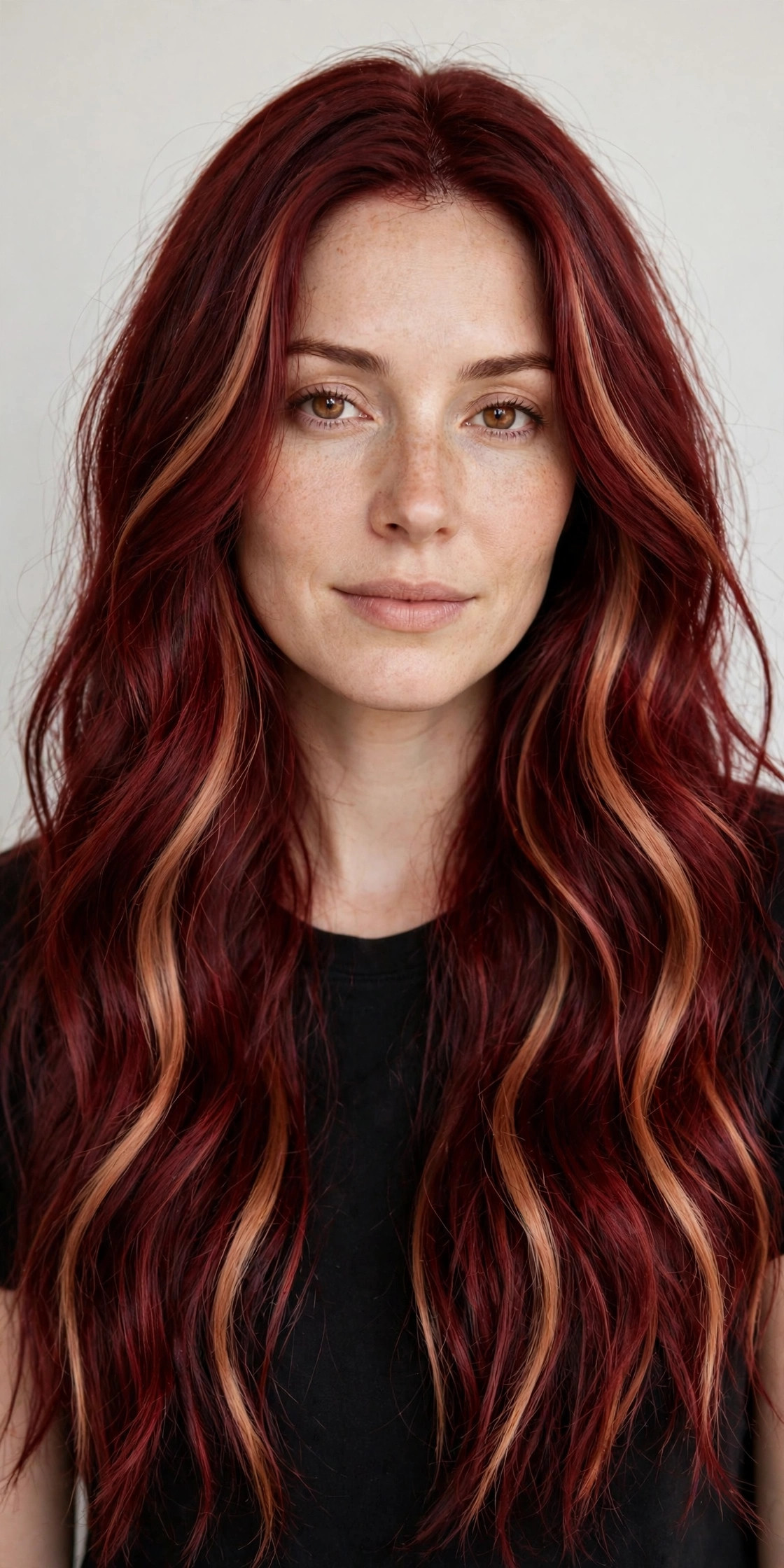
There is a particular kind of red that stops you mid-scroll. It is not bright, not orange, not the flat burgundy of a box dye gone wrong. It looks soft from a distance and layered up close, like fabric catching the light in folds — deep at the roots, warmer where the light hits, darker again underneath. That is the finish this list is about. These velvet hair color ideas are not one shade but one idea worked fifteen ways: rich color with dimension built in, so the hair looks expensive in daylight and still interesting indoors.
If you have ever taken a photo of a red you loved to the salon and come home with something flatter and harsher than the picture, the missing piece was usually dimension. A single flat color reflects light in one block. Velvet color is built in layers — a deep base, a mid-tone that carries the red or plum, and softer ribbons of light through the lengths — so the color moves when you do. Below are fifteen versions, organised by shade family and placement, each with who it suits, how to keep it looking soft, and the exact words to use at your appointment.
Quick answer: Velvet hair color is a deep, dimensional finish — a dark base with softer red, plum, or brown tones blended through it, rather than one flat shade. It suits most skin tones because the depth and undertone can be adjusted: warmer copper-leaning velvets flatter warm skin, cooler plum-leaning velvets flatter cool skin. Reds tend to fade faster than browns, so expect a gloss refresh every few weeks depending on washing habits and hair condition. Start with Velvet Cherry (#1) for the clearest version of the finish, or Velvet Espresso (#4) if you want the subtlest change.
What does velvet hair color actually mean?
Velvet is not a shade name on a color chart; it is a description of how color is built. Three things make a color read as velvet:
- Depth. The base sits in the medium-to-dark range, so the color has somewhere to go. Very light bases read as bright rather than velvet.
- Soft dimension. Instead of one solid color, two or three closely related tones are blended — a deeper tone underneath, the main tone through the mid-lengths, and a slightly lighter ribbon where light naturally hits. The contrast between the tones stays low, so the blend looks smooth rather than striped.
- A soft finish. The hair is styled smooth or in loose waves, not piecey or matte, so light reflects evenly. Shine is part of the look: on velvet shades, healthy-looking ends read as part of the color.
It differs from cherry cola, which leans on a cola-brown base with red poured over it, and from burgundy, which is one specific red-purple shade. Velvet burgundy is a burgundy built the velvet way; velvet itself is the family, and burgundy is one member of it. If your stylist has never heard the word velvet used this way, the description above — deep base, low-contrast dimension, soft finish — is what to say. The salon wording under each idea gives you the same thing in shorter form.
1. Velvet Cherry
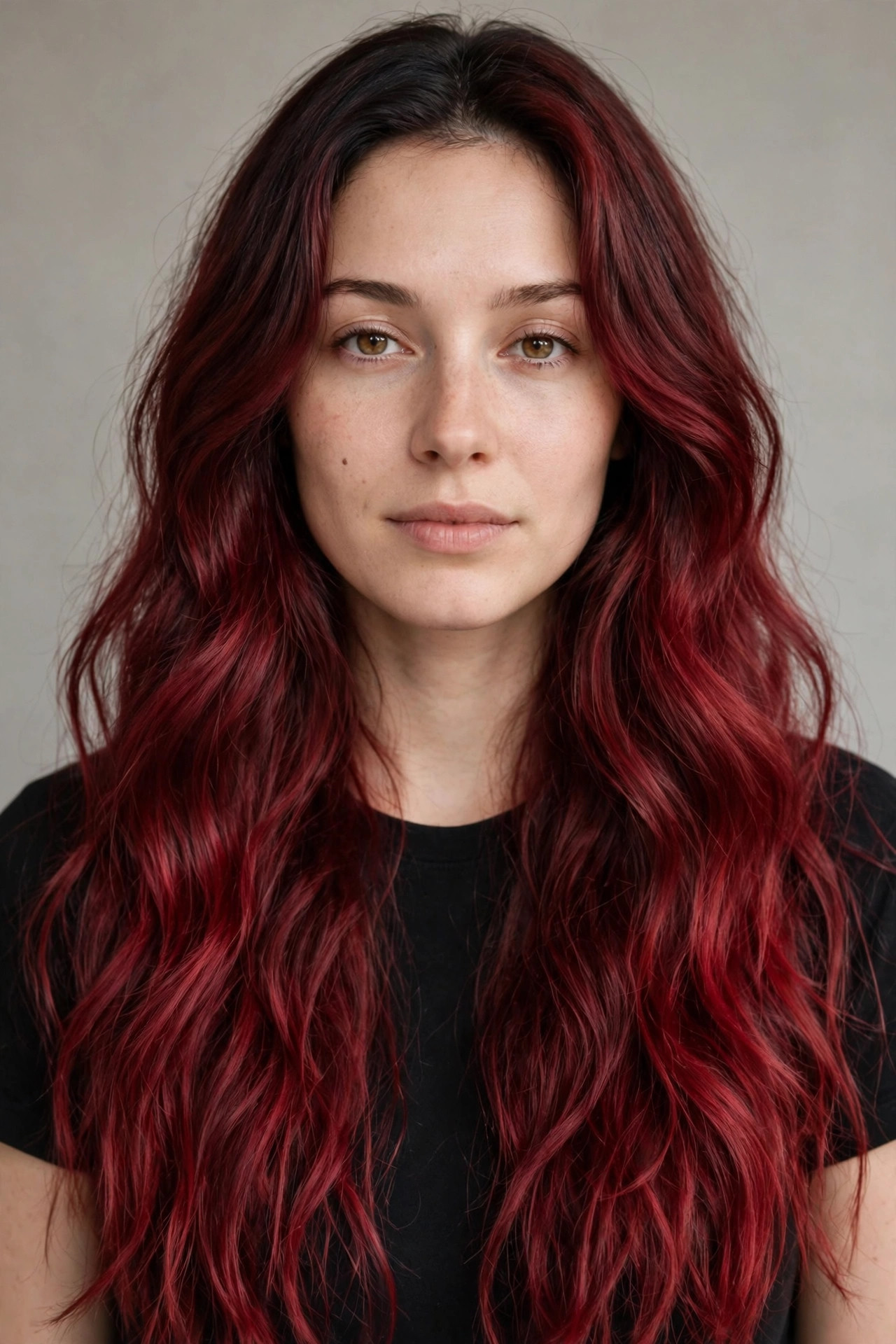
This is the clearest version of the finish: a deep cherry red with the brightness turned down and the depth turned up. Indoors it reads as a dark, polished red; in sunlight the cherry comes forward in soft ribbons. The dimension is what keeps it from looking flat — the lengths carry a slightly lighter cherry than the roots, so the color has movement even when the hair is still.
Who it suits: Fair to medium skin with neutral or cool undertones, and anyone whose natural color is medium brown or darker. On very dark hair it needs lightening first for the cherry to show; on medium brown hair it can often be built with less lift. Straight and wavy hair both show the blend well.
Styling tip: Dry the hair smooth with a paddle brush, then bend only the last inch under. A sleek finish shows the ribbon dimension best; heavy curling breaks the color into pieces and the velvet effect softens.
Ask for: “A deep cherry red with low-contrast dimension — darker at the roots, a touch lighter through the lengths, no bright or orange tones.”
2. Velvet Plum
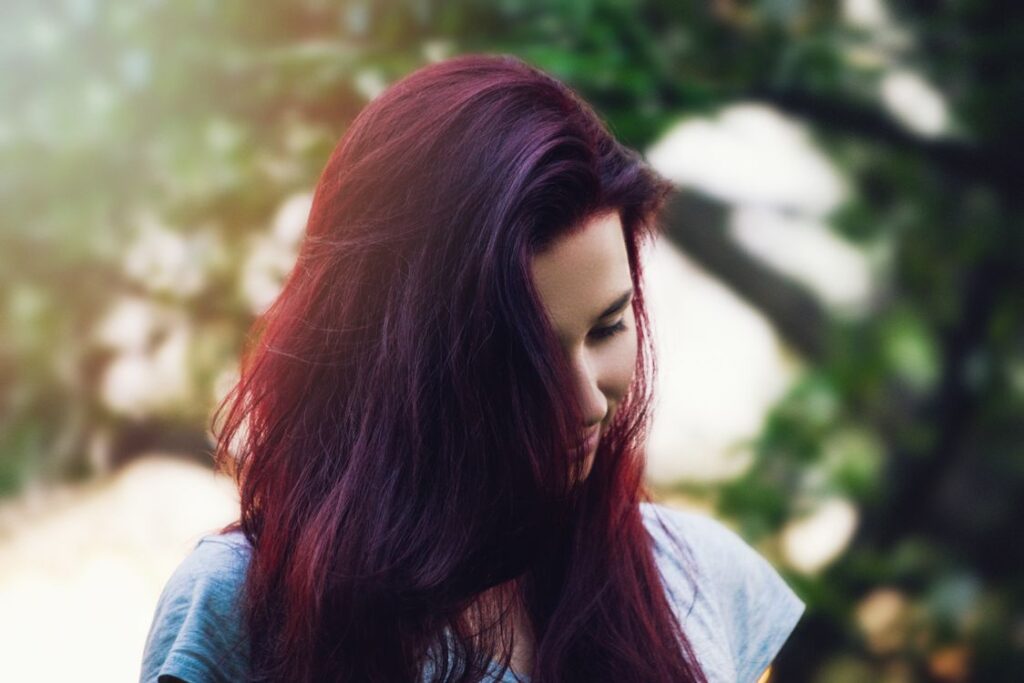
Plum is velvet’s cooler cousin: red with a violet pull, deep enough to read almost brown indoors and clearly purple-red in daylight. It is the version that photographs with the most depth, because the violet tones sit quietly in shadow and come forward in light.
Who it suits: Cool and neutral skin tones especially, and deep brown or black hair, where the plum can be built over the natural depth with less lifting than a bright red would need. It is also a good first red for anyone who found copper or cherry too warm on them.
Styling tip: A centre part and a smooth blow-dry show the violet dimension most clearly. If the plum starts looking flat between appointments, a violet-toned color-depositing conditioner, used every few washes according to the product’s directions, can refresh the cool tones.
Ask for: “A deep plum — red with a violet undertone, darker at the roots, blended so there is no visible line where one tone stops.”
3. Velvet Burgundy
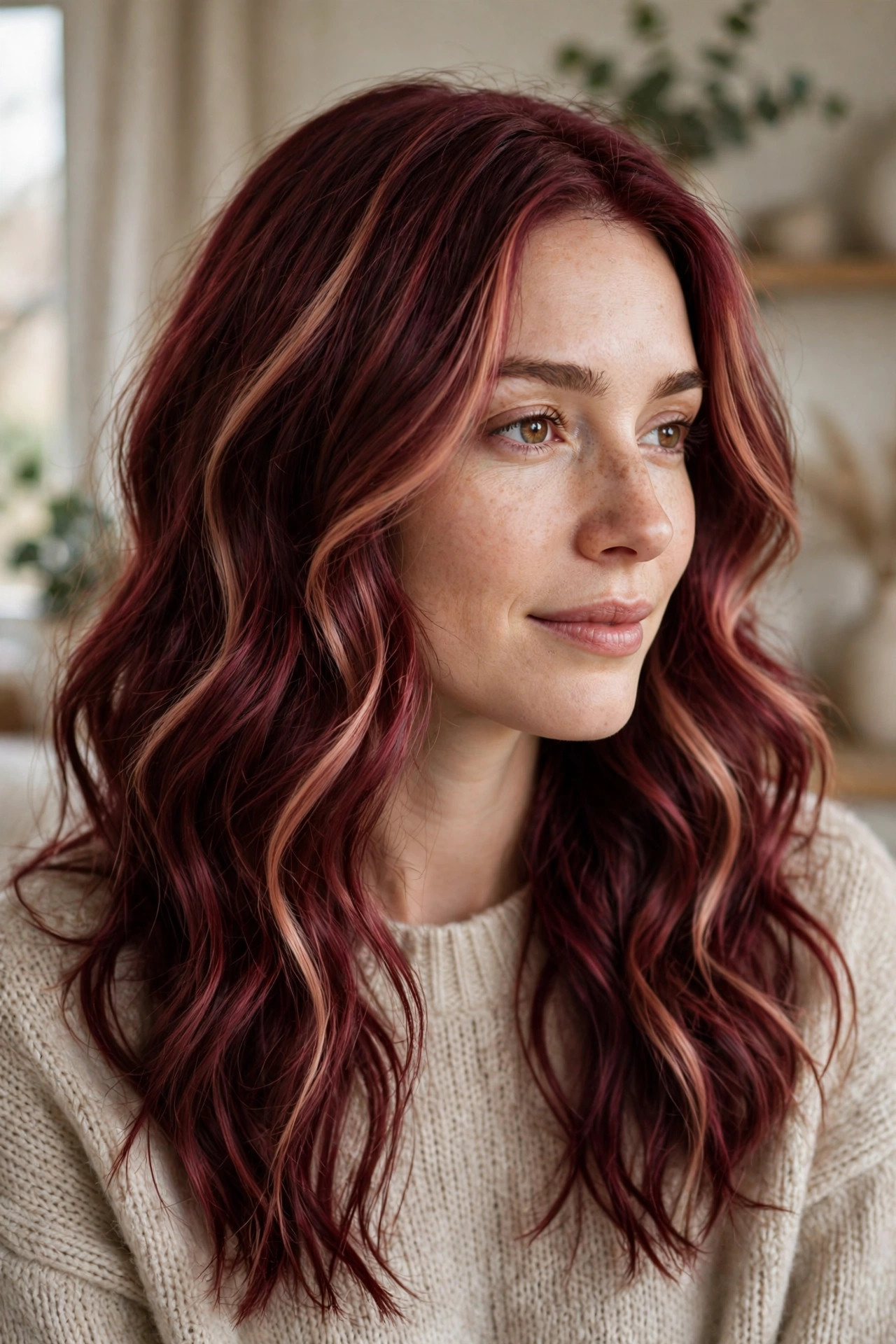
Burgundy built the velvet way: a wine-red base with softer, lighter ribbons through the mid-lengths and ends. The classic burgundy problem is that it can look like one solid block of wine; the velvet build fixes that by letting the lighter ribbons do the talking in sunlight while the base holds the depth indoors.
Who it suits: Medium to deep skin tones, where the wine depth looks rich rather than harsh, and thick hair, which has enough density for the ribbon dimension to show. It flatters longer lengths best, because the ribbons need room to travel.
Styling tip: Loose waves suit this shade well — one pass with a large-barrel iron through the mid-lengths only, leaving the ends straighter, lets the lighter ribbons catch the light in bands.
Ask for: “A velvet burgundy — wine-red base with soft, low-contrast lighter ribbons through the lengths, no harsh highlights.”
4. Velvet Espresso
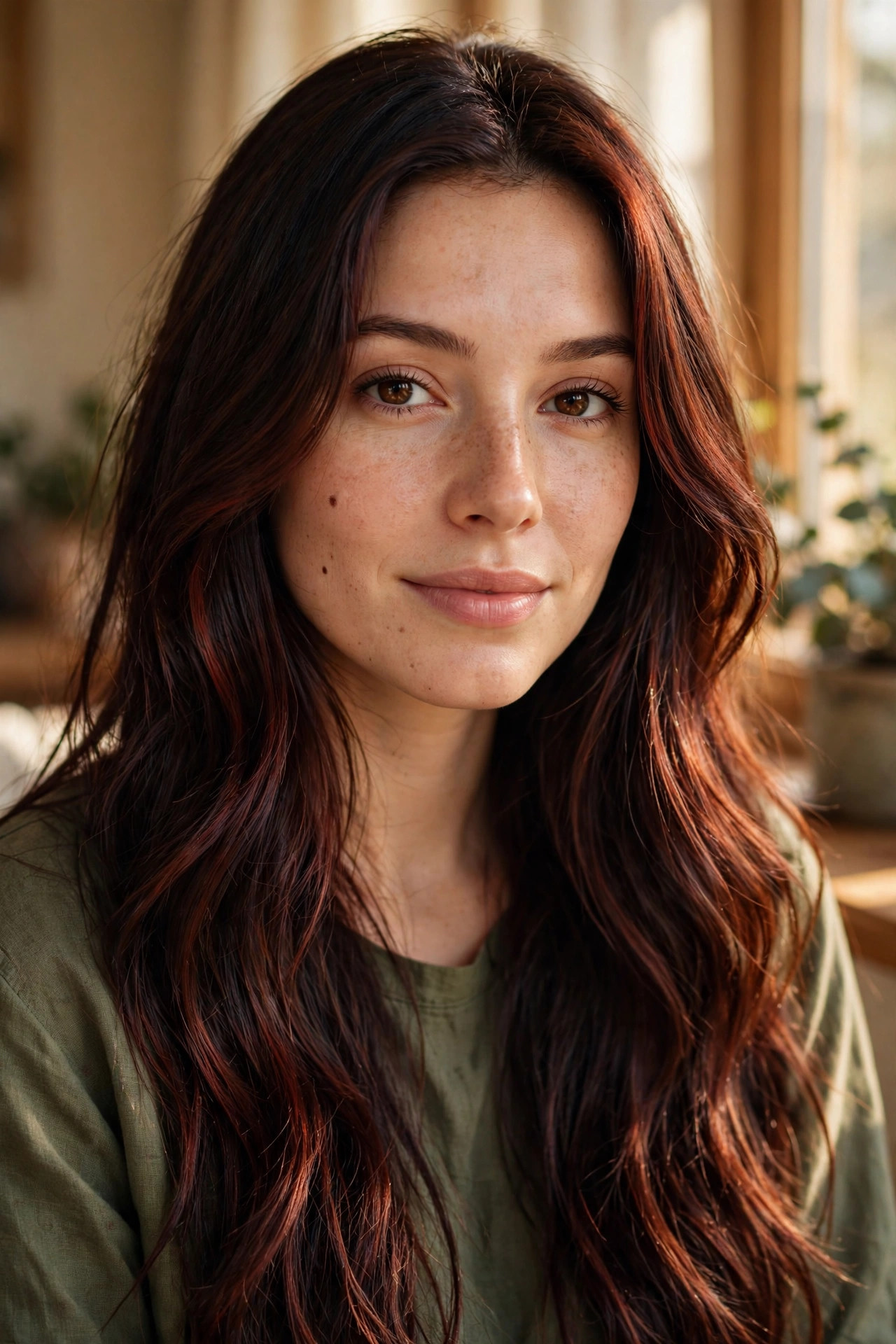
The quietest idea on this list, and the easiest first step into velvet. Espresso is a deep brown with a soft red warmth running through it — dark enough to read as brunette at a glance, with the velvet dimension visible up close and in sunlight. Our fall list includes a velvet espresso brunette among its seasonal shades, and it sits naturally here too as the brown end of the velvet family; if you want the wider autumn palette around it, our fall hair color ideas list gathers fifteen seasonal shades in one place.
Who it suits: Anyone who wants dimension without an obvious color change — dark brown hair especially, where it can often be achieved with little or no lightening, and anyone whose workplace or routine suits a subtler result. It is also the most forgiving velvet for regrowth, because the base sits close to natural dark brown.
Styling tip: Shine carries this shade. A lightweight serum on the ends only, after drying, keeps the brown looking polished without weighing the roots down.
Ask for: “A deep espresso brown with a soft red warmth and subtle dimension through the lengths — brunette first, red second.”
5. Velvet Mahogany
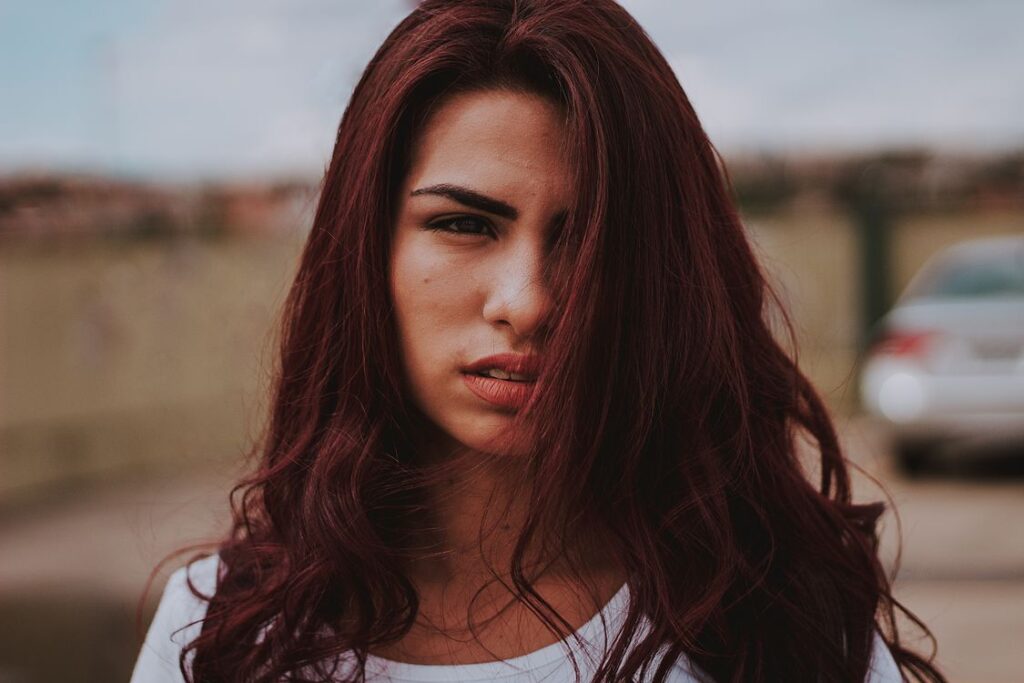
Mahogany is the warm middle of the family: brown and red in near-equal parts, with the red showing as a warm glow rather than a separate color. Built with dimension, it avoids the flat reddish-brown that a single-process mahogany can become, and the lighter ribbons keep it from reading muddy.
Who it suits: Warm and neutral skin tones, and medium brown hair, where the warmth already exists and the color deepens it rather than fighting it. It suits wavy and curly textures well, because the curl pattern breaks the light into soft patches that suit the blend.
Styling tip: Diffuse curls or waves on low heat and leave the cast alone until fully dry, then scrunch gently. Touching curls while they dry disturbs the pattern and the color reads less even.
Ask for: “A dimensional mahogany — warm brown-red, deeper at the roots, with soft lighter ribbons, no orange cast.”
6. Black Cherry Velvet
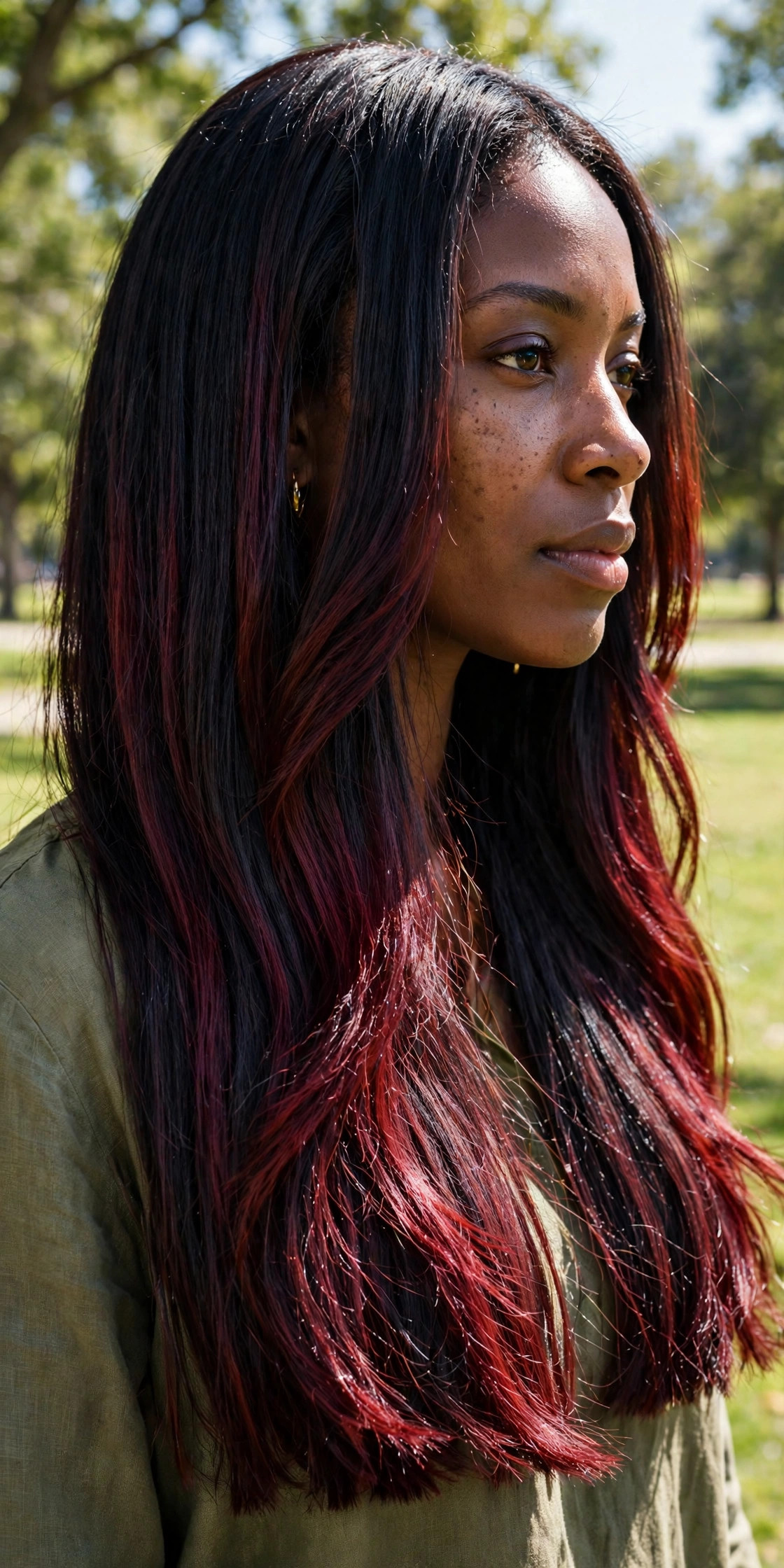
The darkest idea here: hair that reads almost black indoors, then reveals deep cherry in sunlight or under bright light. The trick is restraint — the cherry stays in the mid-lengths and ends, and the roots stay near-black, so the reveal is gradual rather than a visible two-tone line.
Who it suits: Deep skin tones and naturally black or very dark brown hair, where the cherry can sit over the natural depth with minimal lifting. It is also a good choice if you want a dramatic change that still reads polished in formal or professional settings.
Styling tip: Keep the lengths smooth and the ends blunt. A sharp perimeter makes the dark-to-cherry shift look deliberate; wispy, uneven ends blur it.
Ask for: “A black cherry — near-black roots melting into deep cherry through the mid-lengths and ends, blended with no line.”
7. Copper Velvet
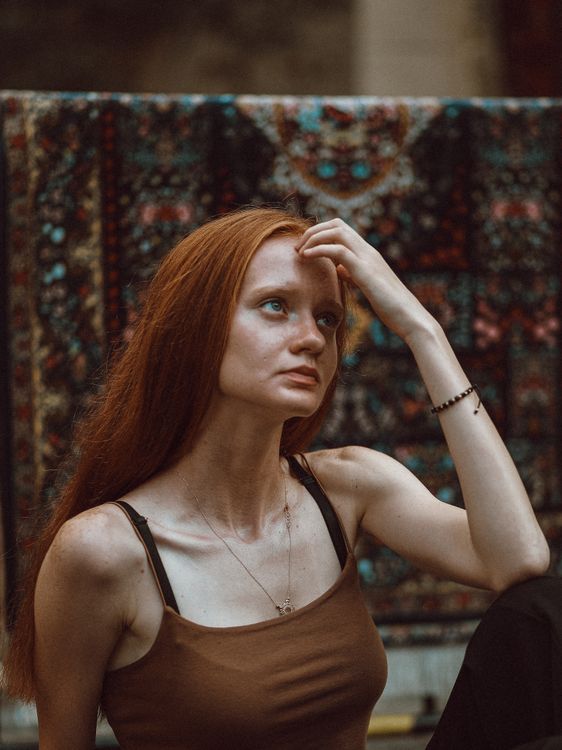
Copper is usually the brightest member of the red family, and velvet tames it: the copper stays, but it sits on a deeper base with softer dimension, so it reads as glowing rather than loud. Think embers rather than flame — warmth with weight behind it.
Who it suits: Warm skin tones and fair to medium skin with freckles or golden undertones. It suits fine hair well, because the depth at the roots gives the illusion of density that bright copper alone can lack.
Styling tip: Copper tones can look brassy as they fade, depending on the formula and washing habits. A color-depositing conditioner in a copper shade, used every few washes according to the product’s directions, helps the warmth stay soft rather than turning orange.
Ask for: “A deep copper with dimension — warm copper over a deeper base, soft and glowing, not bright or orange.”
8. Velvet Rosewood
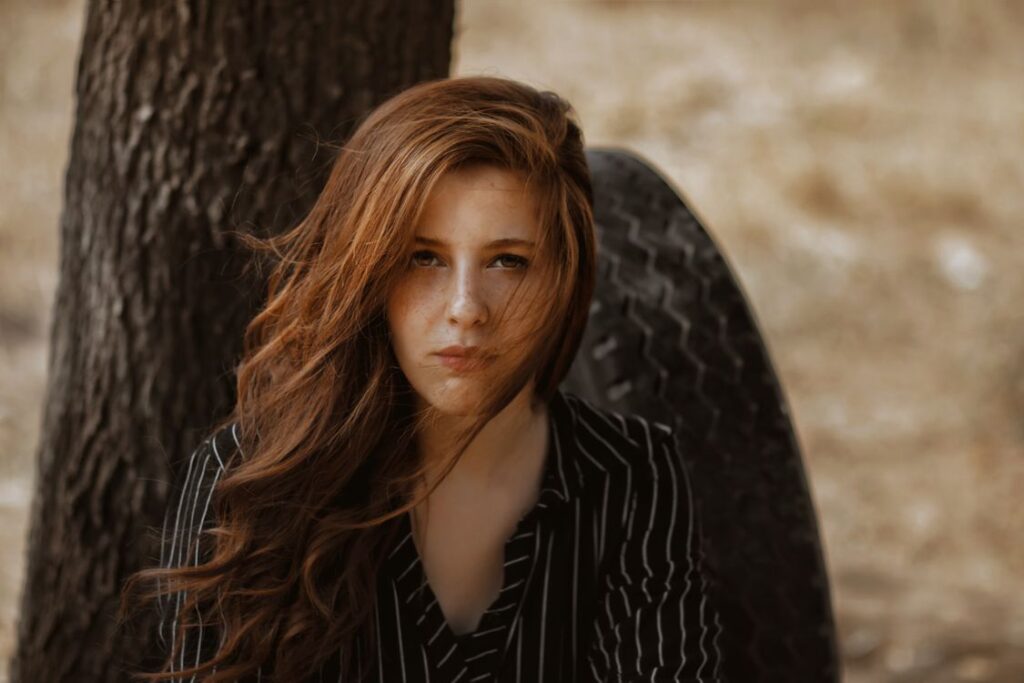
Rosewood sits between red and brown with a dusty, muted rose pull — less sweet than cherry, less purple than plum. It is the velvet for people who like red but not drama: the rose shows in daylight and settles into a soft brown-red indoors.
Who it suits: Neutral skin tones especially, and anyone who found cherry too bright and plum too cool. It works on medium to long lengths, where the muted rose has room to shift between light and shadow.
Styling tip: A loose, low ponytail or a soft half-up style shows rosewood off well, because the gathered shape pushes the lighter ribbons to the surface. For everyday wear, a side part gives the same effect without the styling effort.
Ask for: “A muted rosewood — dusty rose-red over a brown base, soft dimension, nothing bright or pink.”
9. Velvet Balayage
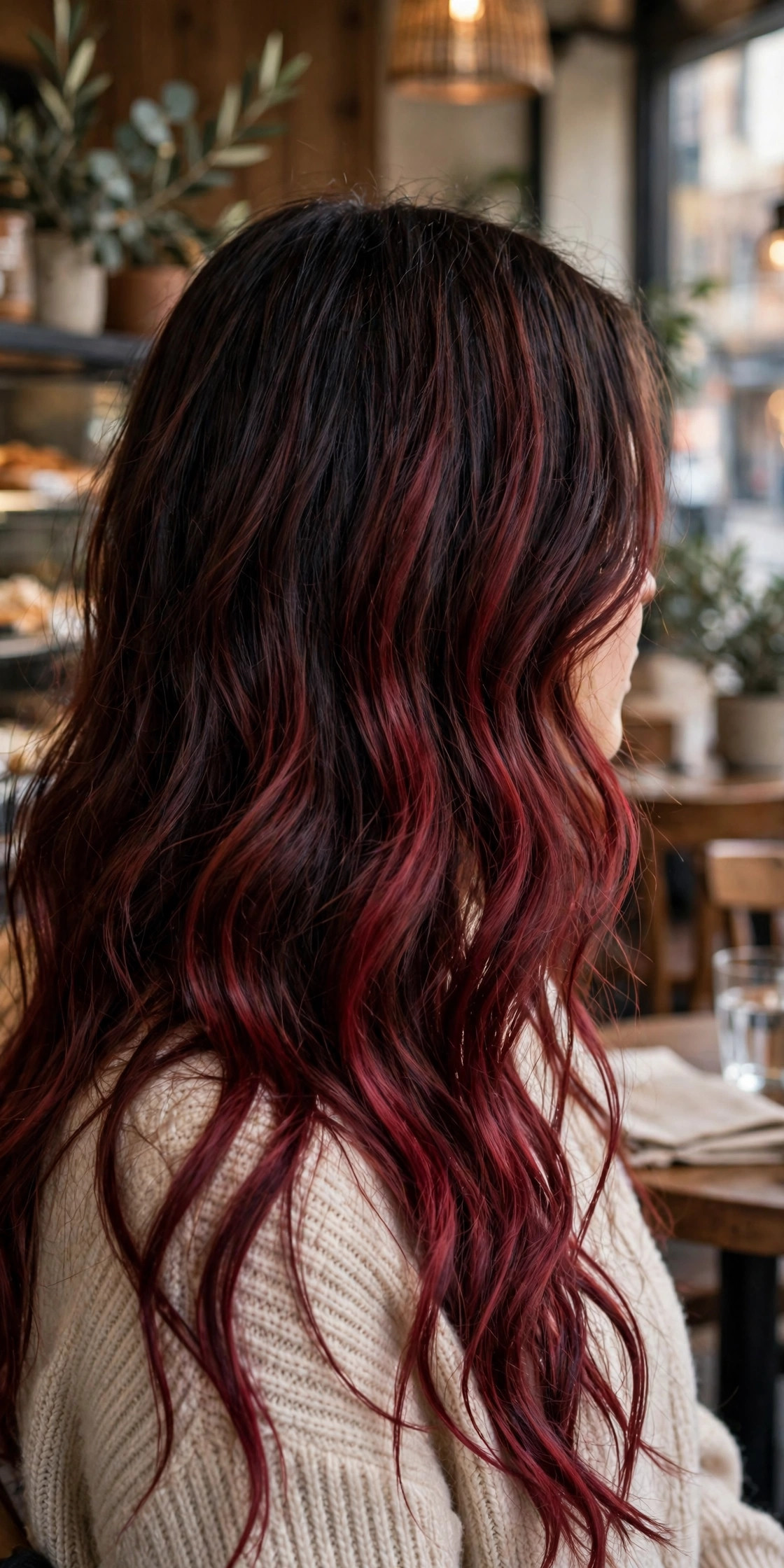
Velvet as a placement rather than a single shade: the roots stay deep, and velvet tones — cherry, plum, or burgundy, chosen for the skin tone — are hand-painted through the mid-lengths and ends with a soft, diffused grow-out. The balayage placement is what makes this the lowest-maintenance velvet on the list, because there is no hard regrowth line.
Who it suits: Anyone who wants velvet color with the longest gap between appointments, and long or medium hair, where the painted placement has length to graduate over. It suits wavy hair particularly well, because the wave pattern hides the blend points.
Styling tip: Waves are the point here — the painted dimension only reads when the hair moves. A large-barrel wave through the lengths, brushed out soft once cool, shows the graduation better than a sleek finish.
Ask for: “A velvet balayage — deep roots, hand-painted cherry/plum tones through the lengths, soft grow-out, no foil lines.” For the wider technique, our balayage hair color ideas list covers twenty-two placements and shade combinations.
10. Velvet Ombré
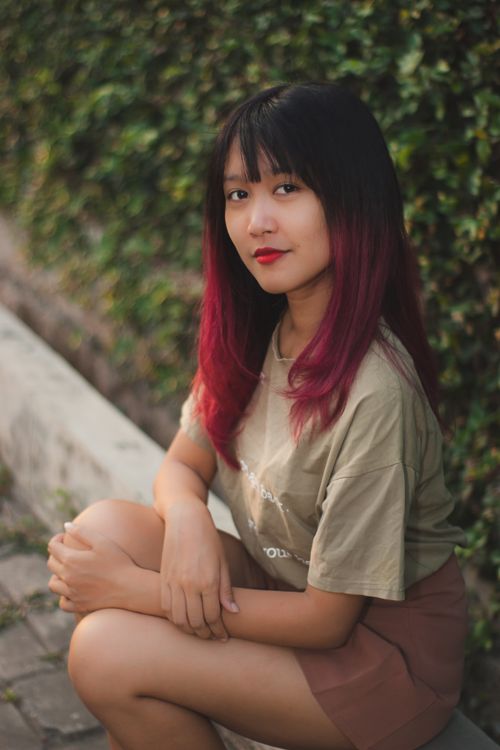
Ombré takes the velvet idea and stretches it: dark at the roots, velvet red or plum at the ends, with a long, gradual melt in between. Unlike the sharp two-tone ombrés of a decade ago, the velvet version keeps the transition zone wide — a third of the length or more — so the change reads as a gradient, not a dip-dye.
Who it suits: Long hair, which gives the gradient room, and anyone growing out a darker color who wants the ends to do the talking while the roots stay natural. It suits straight hair well, because a smooth finish shows the gradient cleanly.
Styling tip: Keep the ends in good condition, since the lightest, most-seen part of the color sits exactly where hair is oldest. A regular trim schedule and a leave-in conditioner through the ends help the gradient stay even rather than fraying into lighter, drier tips.
Ask for: “A soft velvet ombré — dark roots melting gradually into cherry/plum ends, a wide transition zone, no hard line.”
11. Velvet Bob
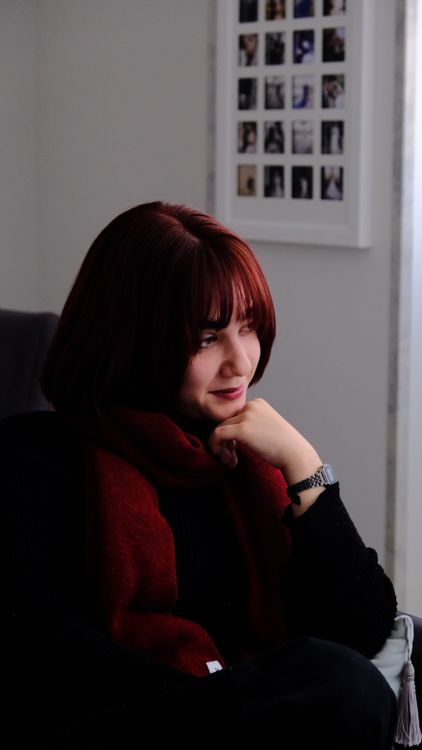
Velvet color on a short, blunt shape: the color has less length to travel, so the dimension is packed tighter — deeper roots, a quicker ribbon shift, and ends that hold the lightest tone. On a bob the velvet finish reads more graphic and polished than on long hair, because the outline is so clean.
Who it suits: Short to chin-length hair, and anyone pairing a color change with a cut change in one appointment. The shape matters as much as the shade: a full, blunt perimeter, like the cut in our Italian bob haircut ideas guide, holds the velvet dimension best, because the weight sits at the ends where the lightest tone lives.
Styling tip: One inward bend at the ends, made while blow-drying with a round brush, is the whole routine. Over-curling a velvet bob breaks the color into pieces and the graphic effect is lost.
Ask for: “A velvet cherry/plum on a blunt bob — deep roots, dimension packed through the short lengths, lightest tone at the ends.”
12. Velvet Curls
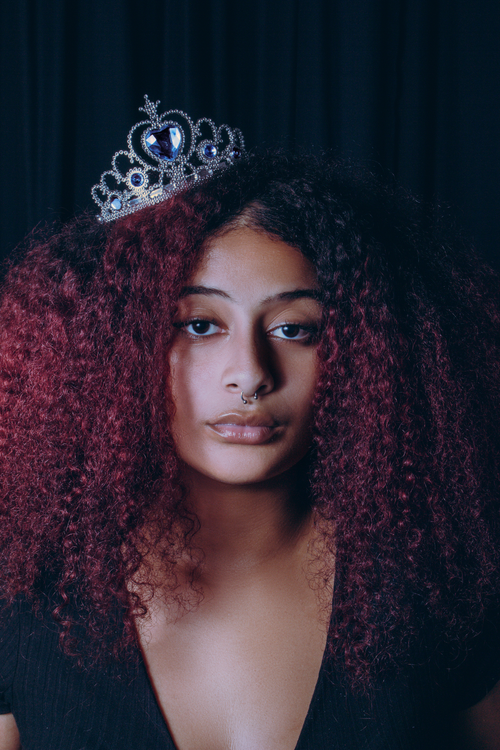
Curls change how velvet reads: each curl catches light on its outer curve and falls into shadow on its inner curve, so the dimension appears and disappears as the head moves. The velvet build suits curls because the low-contrast blend does not fight the curl pattern — the color follows the shape instead of sitting on top of it.
Who it suits: Wavy-to-curly and coily textures, and anyone whose curls have made solid color look patchy before. The ribbon placement should follow the curl clumps rather than cutting across them, so ask for the color to be placed with the curl pattern in mind.
Styling tip: Apply styling product to soaking-wet hair, scrunch, and diffuse on low heat or air-dry. Brushing curls dry breaks the clumps and the dimension scatters into frizz.
Ask for: “Dimensional velvet color placed to follow my curl pattern — deep base, soft ribbons, no harsh contrast between clumps.”
13. Velvet with Blonde Dimension
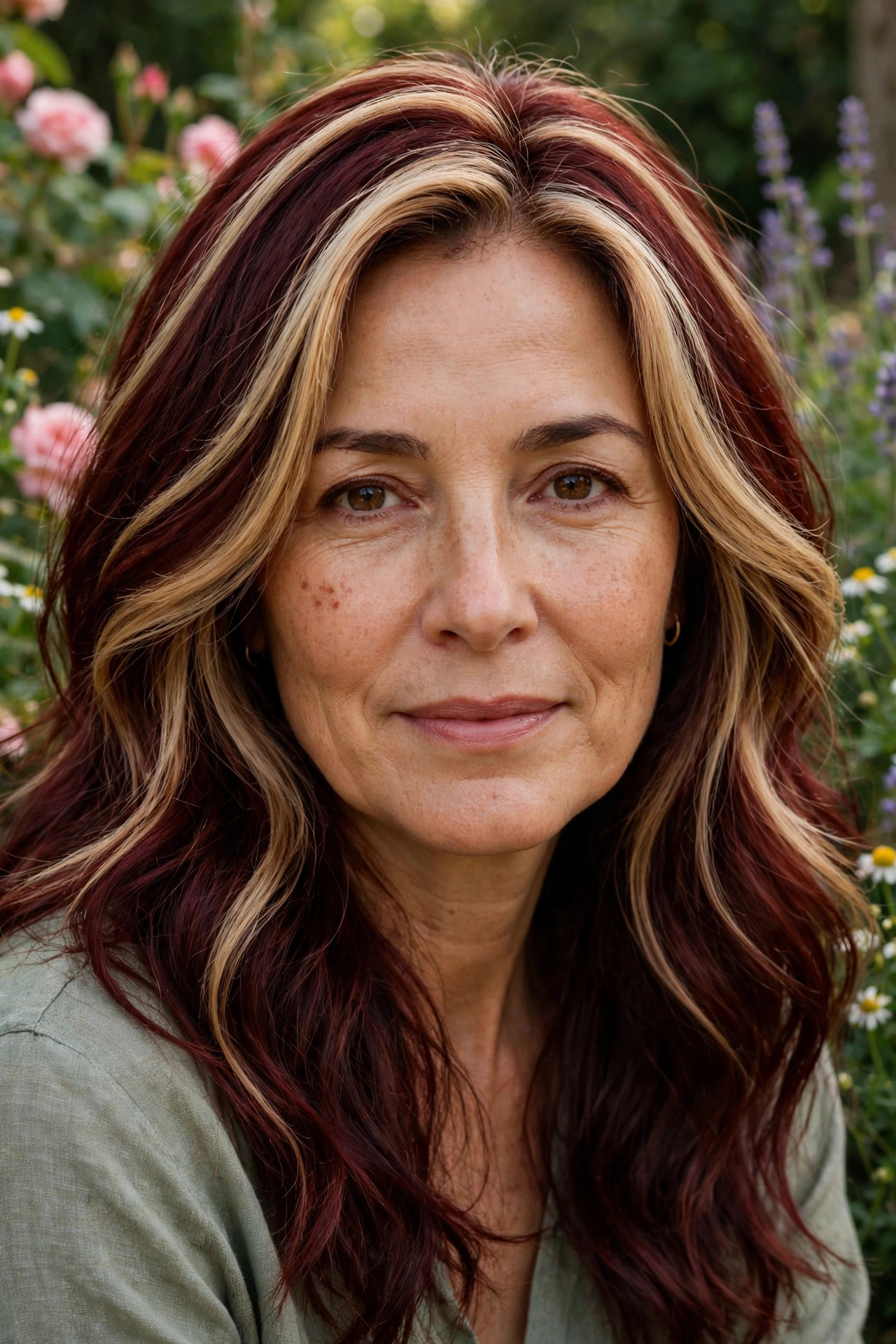
Velvet does not have to stand alone. Soft blonde ribbons — a few shades lighter than the velvet base, placed around the face and through the crown — lift the whole finish and keep deep velvet from reading heavy. The blonde stays warm and muted rather than icy, so the two tones feel like one family.
Who it suits: Medium to deep velvet bases on medium skin tones, and anyone who found solid velvet a little flat on them. It is also a useful bridge for readers moving from blonde toward red: the familiar blonde stays, and the velvet grows around it.
Styling tip: Keep the blonde ribbons warm. A purple shampoo used too often, or left on too long, can push warm blonde ribbons ashy and break the velvet harmony; follow the product’s directions and use it only when the ribbons start looking brassy.
Ask for: “Velvet cherry/plum base with soft, warm blonde ribbons around the face and crown — muted blonde, blended, no icy tones.”
14. Velvet on Dark Hair
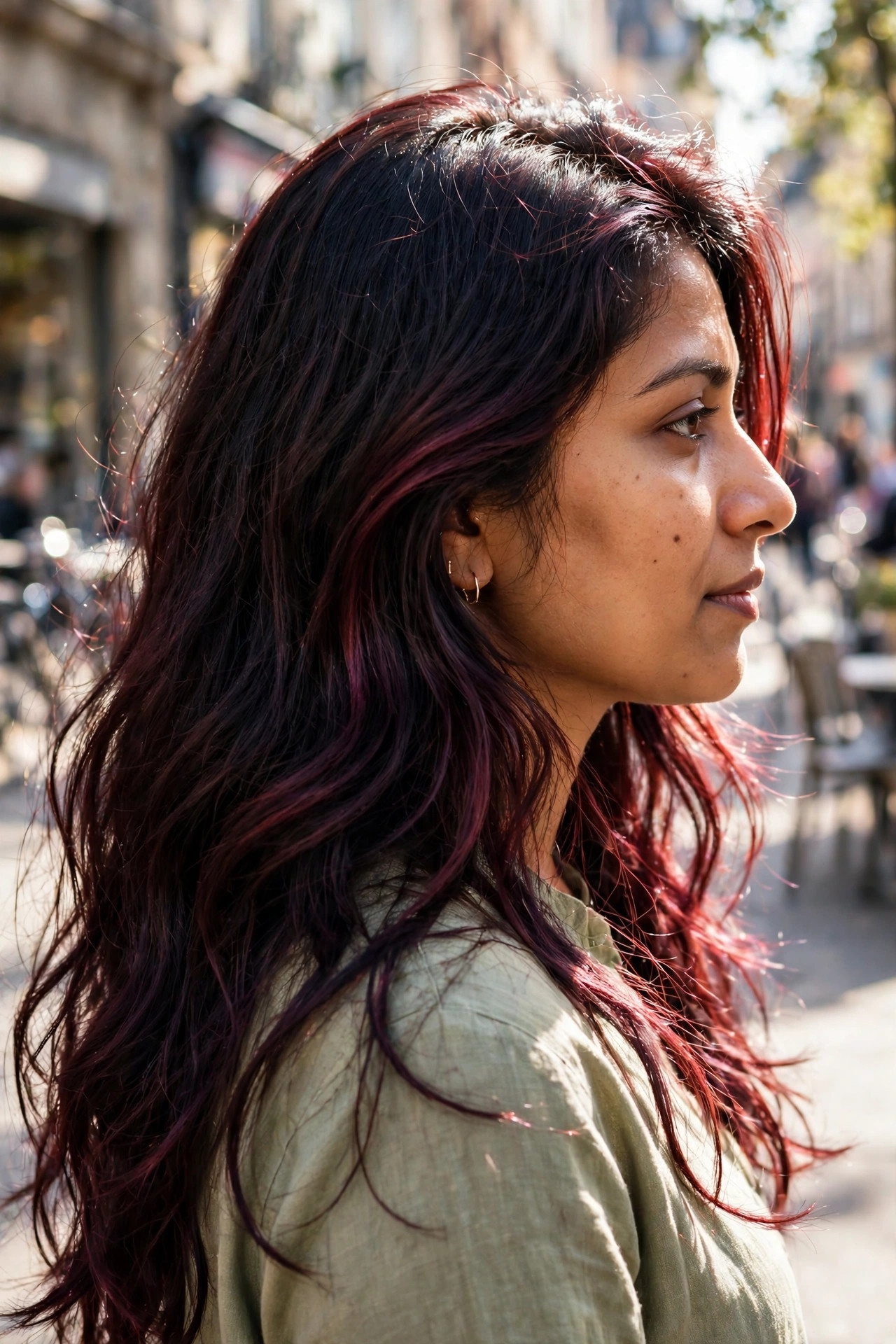
For naturally black or very dark brown hair, velvet can be built with less lightening than a bright red would need — the depth of the base does most of the work, and the velvet tones sit as a deep glow rather than a loud color. The result reads subtle indoors and rich in sunlight, and it grows out softly because the roots stay close to the natural color.
Who it suits: Naturally dark hair, and anyone who wants a first color change without a big lift or a big maintenance commitment. It also suits anyone whose hair is fragile or previously colored, since the lifting required is usually gentler than for brighter reds — your stylist can judge this from the hair’s condition.
Styling tip: Gloss is the maintenance here rather than frequent recoloring. A clear or tinted gloss every few weeks, at the salon or with a product made for color-treated hair, refreshes the velvet glow without another full color appointment.
Ask for: “Velvet tones over my natural dark base — deep cherry/plum glow, minimal lift, soft grow-out, no bright red.”
15. Velvet Gloss
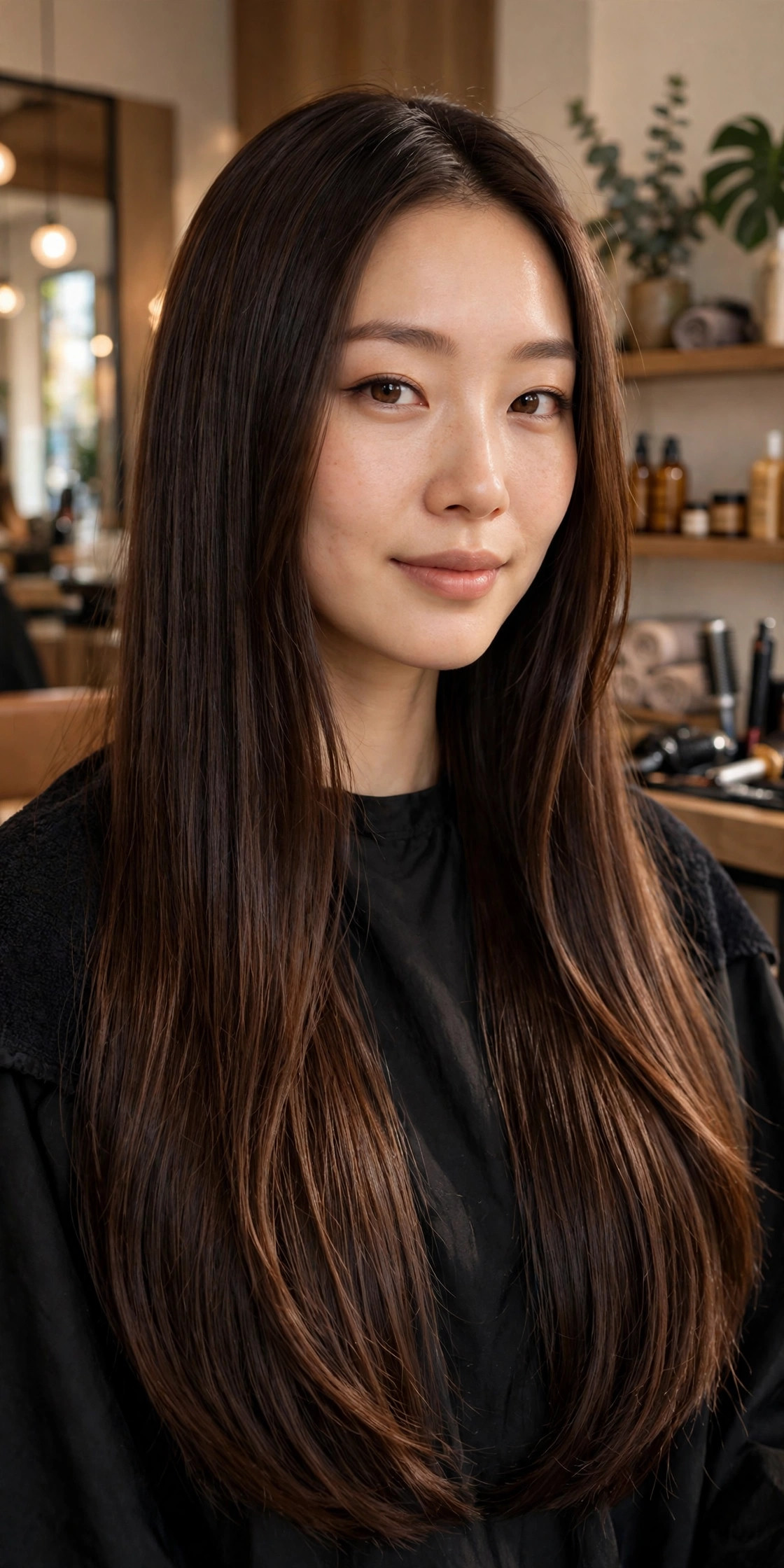
The sheerest idea on the list: a translucent velvet gloss over the existing color, adding depth, warmth, and shine without changing the base shade. It is the closest thing to trying velvet before committing — a gloss washes out gradually over several weeks, depending on washing habits, and leaves the underlying color intact.
Who it suits: Anyone unsure about a full velvet commitment, anyone between appointments who wants the finish refreshed, and hair that is already colored and cannot take another full process yet. It also suits fine hair, because a gloss adds shine without the weight of a full color service.
Styling tip: A gloss shows its shine most clearly on smooth, healthy-looking ends. A weekly conditioning mask, left on for the time the product directs, helps the gloss hold its finish rather than fading patchily.
Ask for: “A sheer velvet gloss in cherry/plum over my current color — depth and shine only, no lift, no permanent change.”
How to ask your stylist for velvet color (exact wording)
Take two or three photos from this list that share the same depth — not one cherry, one plum, and one espresso — and say this: “I want a velvet finish: a deep base with soft, low-contrast dimension, darker at the roots and a touch lighter through the lengths. No bright tones, no harsh highlights, no visible lines.” Then add the shade sentence from your chosen idea above. Bring a photo of your hair in daylight too, so the stylist can judge your starting level honestly. If the stylist says your starting color needs more lift than you expected, that is useful information, not a sales pitch — red and violet tones show truly only once the hair is light enough to hold them, and a good stylist will say so before starting.
Keeping velvet color rich, honestly
Reds and violets tend to fade faster than browns. That is a property of the color molecules and the hair’s porosity, not a sign that the color was done badly — but it does mean velvet shades need a little more care than a brown. What helps, in order of effect:
- Wash less often, and cooler. Warm water and frequent washing open the hair’s surface and let color molecules escape faster. Cooler water and fewer washes slow that down; dry shampoo between washes can help some hair types, though it does not suit everyone.
- Use products made for color-treated hair. A shampoo and conditioner formulated for color-treated hair, used as directed, helps the color hold longer than a clarifying or volumising formula, which can strip color faster.
- Refresh the tone, don’t just wait. A color-depositing conditioner in a matching cherry, plum, or copper shade, used every few washes according to the product’s directions, tops the tone up between salon visits. A salon gloss every few weeks does the same job more evenly.
- Heat and sun fade color. Heat protectant before hot tools, and a hat or UV-protective product in strong sun, can slow fading — they do not stop it entirely.
- Condition the ends. The oldest hair holds color least evenly. A leave-in conditioner or mask through the mid-lengths and ends helps the color fade evenly rather than patchily.
For the wider routine behind these points, our hair care tips for healthy hair guide covers washing, heat, and conditioning in more detail.
FAQs
Is velvet hair color the same as burgundy?
No. Burgundy is one shade — a wine-red with a purple pull. Velvet is a finish: a deep base with soft, low-contrast dimension. Velvet burgundy is one member of the velvet family, alongside velvet cherry, velvet plum, velvet espresso, and the rest of this list. If you ask for burgundy, you may get a flat wine color; if you ask for velvet burgundy, you get the wine shade built with dimension.
Does velvet color suit warm or cool skin tones?
Both — the undertone does the work, not the finish itself. Warmer velvets (copper velvet, mahogany) tend to flatter warm and golden skin; cooler velvets (plum, black cherry) tend to flatter cool and pink-toned skin; neutral skin can usually wear either. If you are unsure, hold fabric swatches in cherry and plum against your face in daylight — the one that makes your skin look even, rather than tired or flushed, is your undertone.
Will I need bleach for velvet color?
It depends on your starting color and the shade you want. Dark hair can often carry velvet espresso, black cherry, and deep plum with little or no lightening, because those shades sit close to the natural depth. Brighter velvets — cherry, copper, rosewood — usually need some lightening on dark hair for the tone to show truly. Previously colored hair, very dark hair, and hair that has been lightened before all change the answer, so a strand test at the salon is the honest way to know before committing.
How long does velvet hair color last?
There is no fixed answer, because fading depends on the shade, the formula, the hair’s porosity, how often it is washed, and the products used. As a rough guide, the tone usually looks freshest for the first few weeks and then softens gradually; reds and violets tend to soften faster than browns. A gloss refresh or a color-depositing conditioner every few weeks, used as directed, extends the fresh look. When the roots and the lengths start telling two different stories, it is time for a salon visit rather than another at-home top-up.
Can I do velvet color at home?
A sheer velvet gloss or a deposit-only color can work at home on hair that is already close to the target depth and in good condition — but dimension is salon work. The blended ribbons, the root melt, and the lift judgement are hard to do evenly on your own head, and a strand test is essential before any at-home color. If your hair is dark, previously colored, or damaged, a stylist visit is the safer route; correcting an uneven red at home usually costs more, in hair condition and in money, than the appointment would have.
Final word
Velvet is not a trend to chase; it is a way of building color so that it looks soft, deep, and deliberate instead of flat. Pick the shade by undertone, the placement by how often you want to be in the salon chair, and the finish by how you actually style your hair on a normal morning. Save the idea that matches your hair, take the salon wording with you, and let the dimension do the work.


