18 Best Short Haircuts for Men with Thick Hair (2026 Guide)
Thick hair is the envy of every guy with thinning hair — until you’re the one dealing with it. If your hair grows out instead of down, puffs up the moment it gets humid, and turns every “low maintenance” cut into a mushroom by week three, you know thick hair is a blessing that needs the right management.
The secret to great short haircuts for thick hair isn’t fighting the volume — it’s engineering it. The right cut removes weight where it causes problems, keeps length where it creates style, and uses your natural thickness as an asset instead of a liability.
Here are 18 short haircuts built for thick hair, with honest guidance on who each suits, how to style it, and what to tell your barber.
Quick Answer
The best short haircuts for men with thick hair are textured crops, fades with length on top, French crops, and messy quiffs — all with internal weight removal. The golden rule: keep the sides short and clean, manage bulk on top with texture and thinning, and never go for a uniform all-over length.
The Fundamentals: What Thick Hair Needs
Before the cuts, understand the three principles every good thick-hair cut follows:
- Weight removal, not just shortening. Thinning shears and point-cutting remove bulk without visible layers. If your barber never thins your hair, find a new barber.
- Contrast between top and sides. Short, clean sides with textured length on top is the formula behind nearly every flattering thick-hair cut.
- Texture over sleekness. Thick hair rarely lies perfectly flat — and that’s fine. Cuts designed for texture look better and need less product.
Short & Sharp
1. Textured Crop with Skin Fade
The modern classic. A skin fade on the sides (blended from #0 at the bottom) with 2–3 inches of choppy, textured length on top. The fade removes all the side bulk; the texture on top turns thickness into style.
Why it works for thick hair: The fade does 70% of the work. With the sides gone, the top can be as thick as it wants.
Tell your barber: “Skin fade on the sides, textured crop on top, about two inches, lots of texture. Thin it out underneath.”
Styling: Matte clay, worked through dry hair. 2 minutes.
2. French Crop
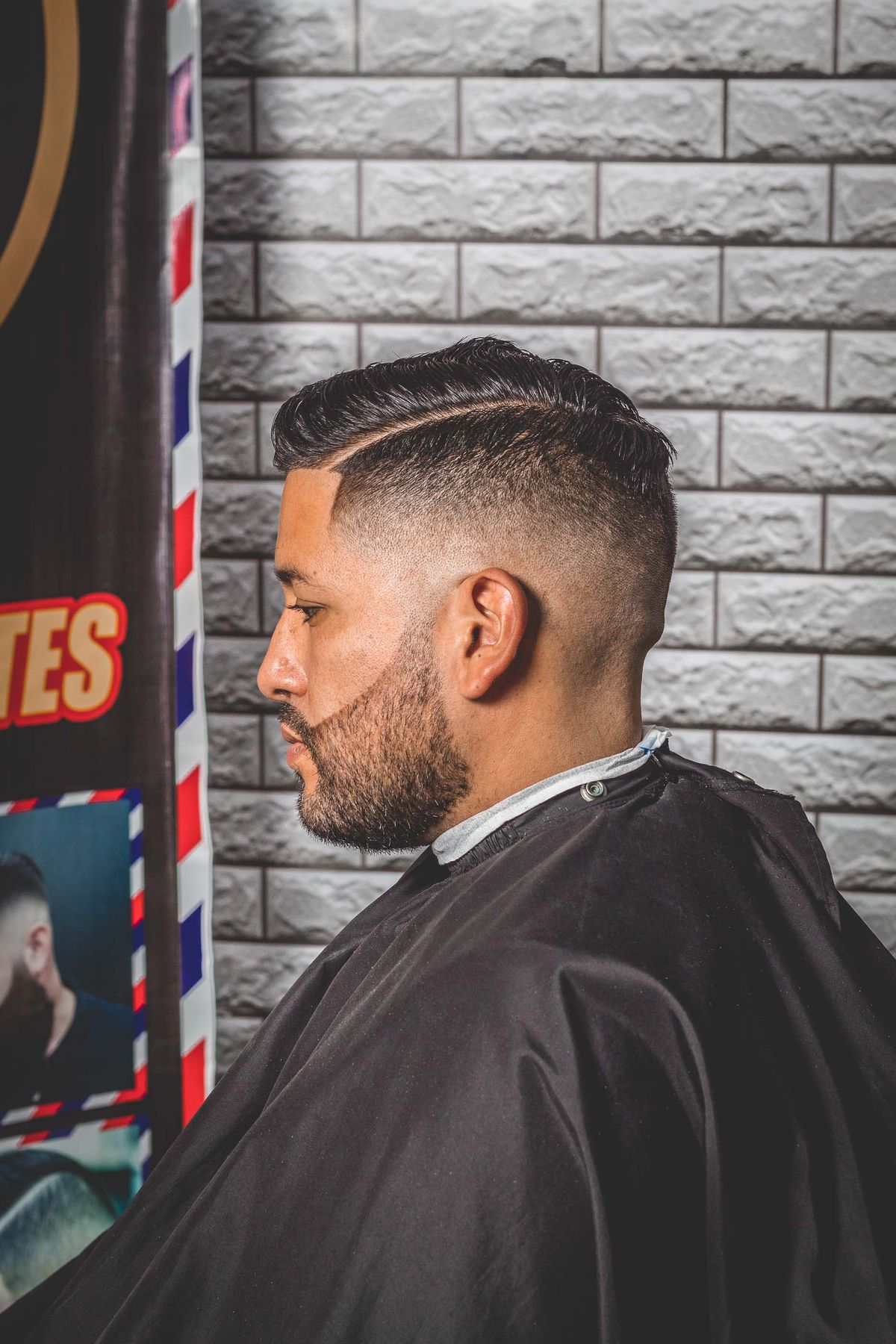
Short fringe, short back and sides, textured top. The French crop has been trending for years because it’s the lowest-effort cool cut in existence — and thick hair gives it the volume it needs.
Best for: Straight to wavy thick hair. Very curly hair needs a longer variation.
Maintenance: Trims every 3–4 weeks to keep the fringe sharp.

3. Buzz Cut with Tapered Sides
Not a uniform buzz — a buzz with tapered (not faded) sides and slightly more length on top (#4 or #5 on top, tapered down the sides). The taper keeps it from looking like a tennis ball.
Why it works: Zero styling, maximum neatness. Thick hair actually makes a buzz look better — it has density and presence.
4. Crew Cut (Modern)
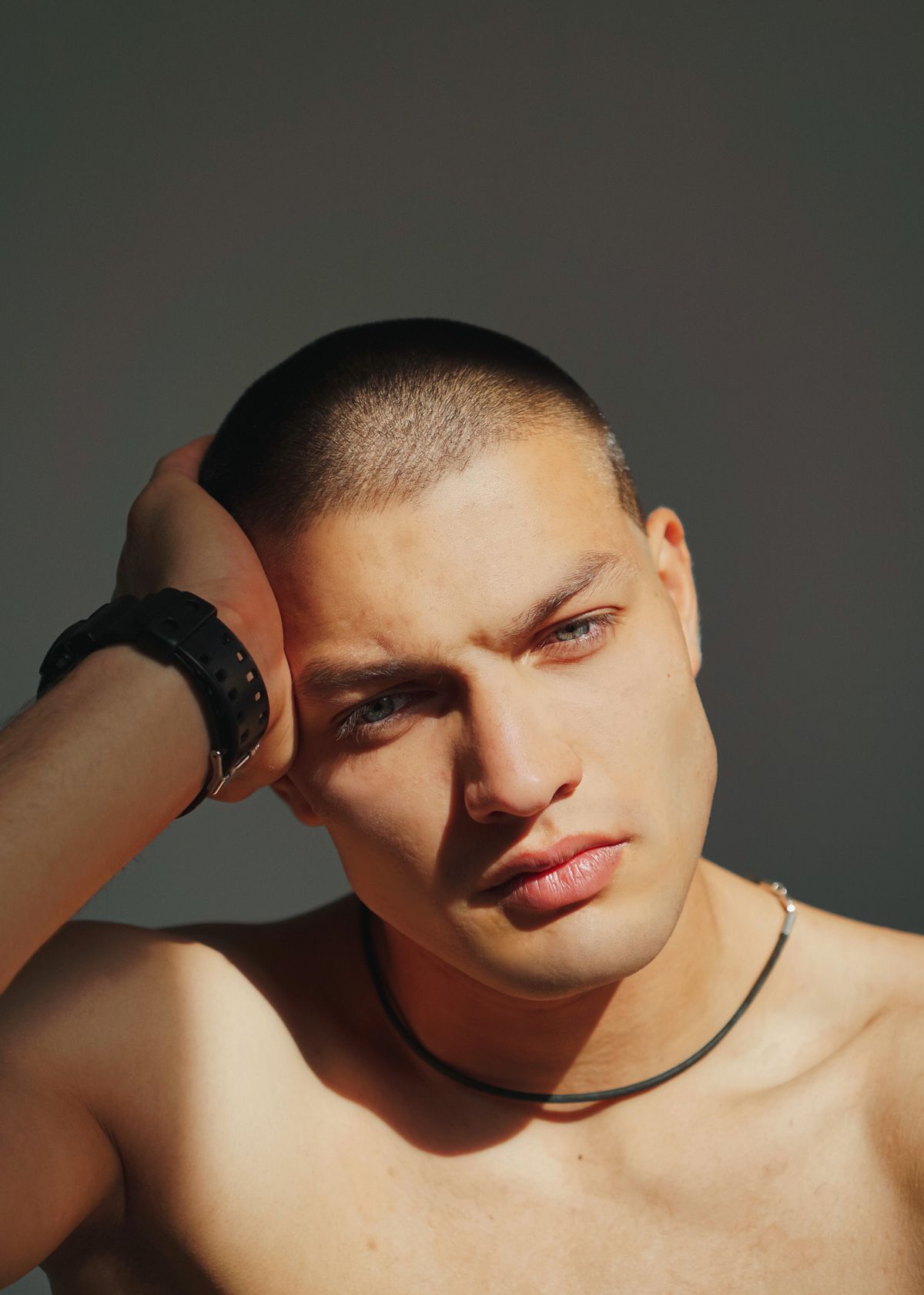
The Ivy League classic, updated: short sides with a bit more length on top than the traditional military version, textured rather than flat. Timeless, professional, and completely fuss-free.
Best for: Guys who want one cut that works for the office and the weekend.
Fades & Tapers
5. Low Taper Fade with Textured Top
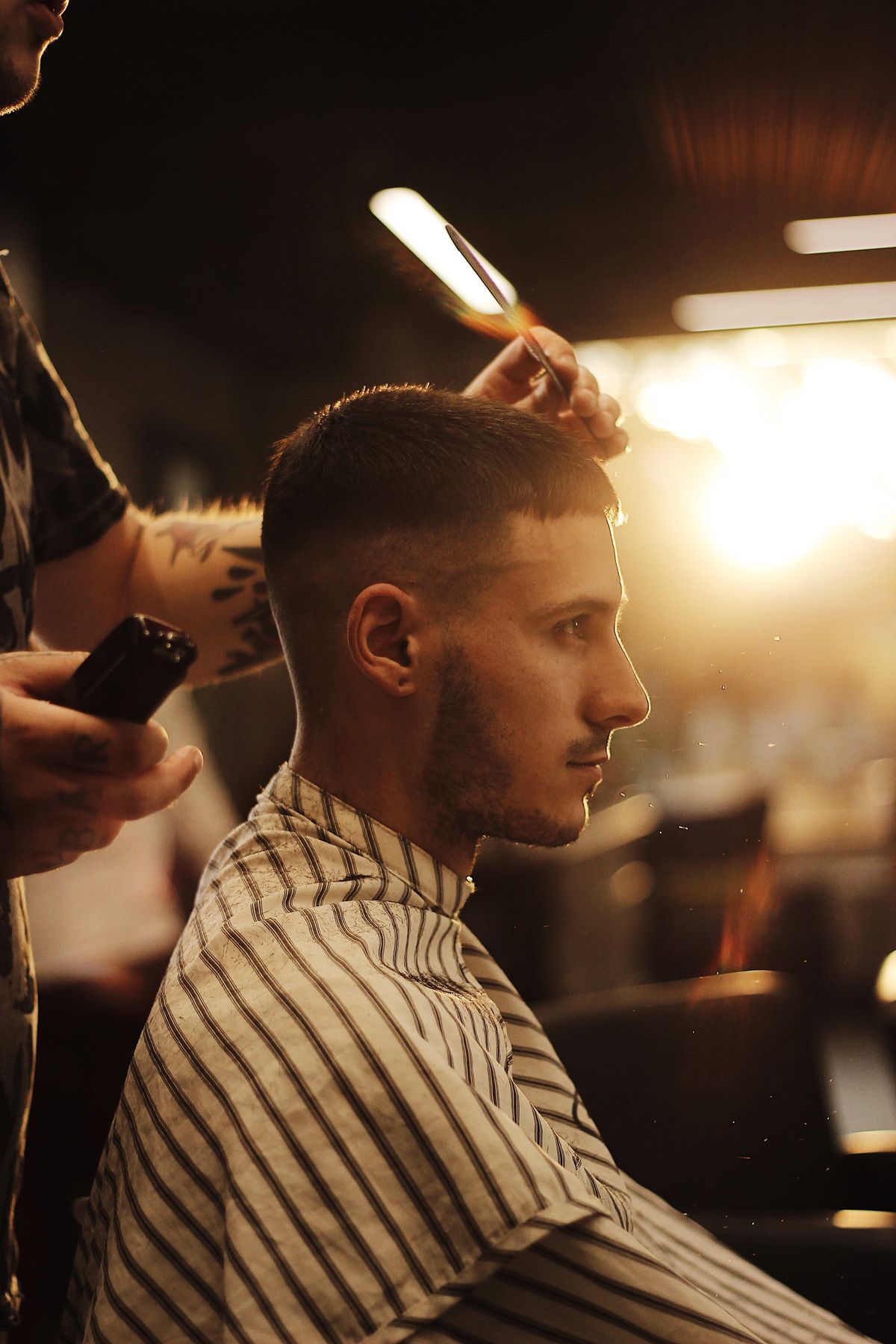
The taper fade keeps more hair at the temples and neckline than a skin fade — a subtler, more versatile look. Paired with a textured top, it’s the “I have my life together” cut.
Tell your barber: “Low taper fade, keep it natural at the neckline, textured length on top.”

6. Mid Fade with Quiff
A mid fade (starting halfway up the sides) with a quiff — the front swept up and back. Thick hair holds a quiff beautifully without the product overload thinner hair needs.
Styling: Blow-dry the front up and back with a pre-styler, then matte paste. The thickness does half the work.
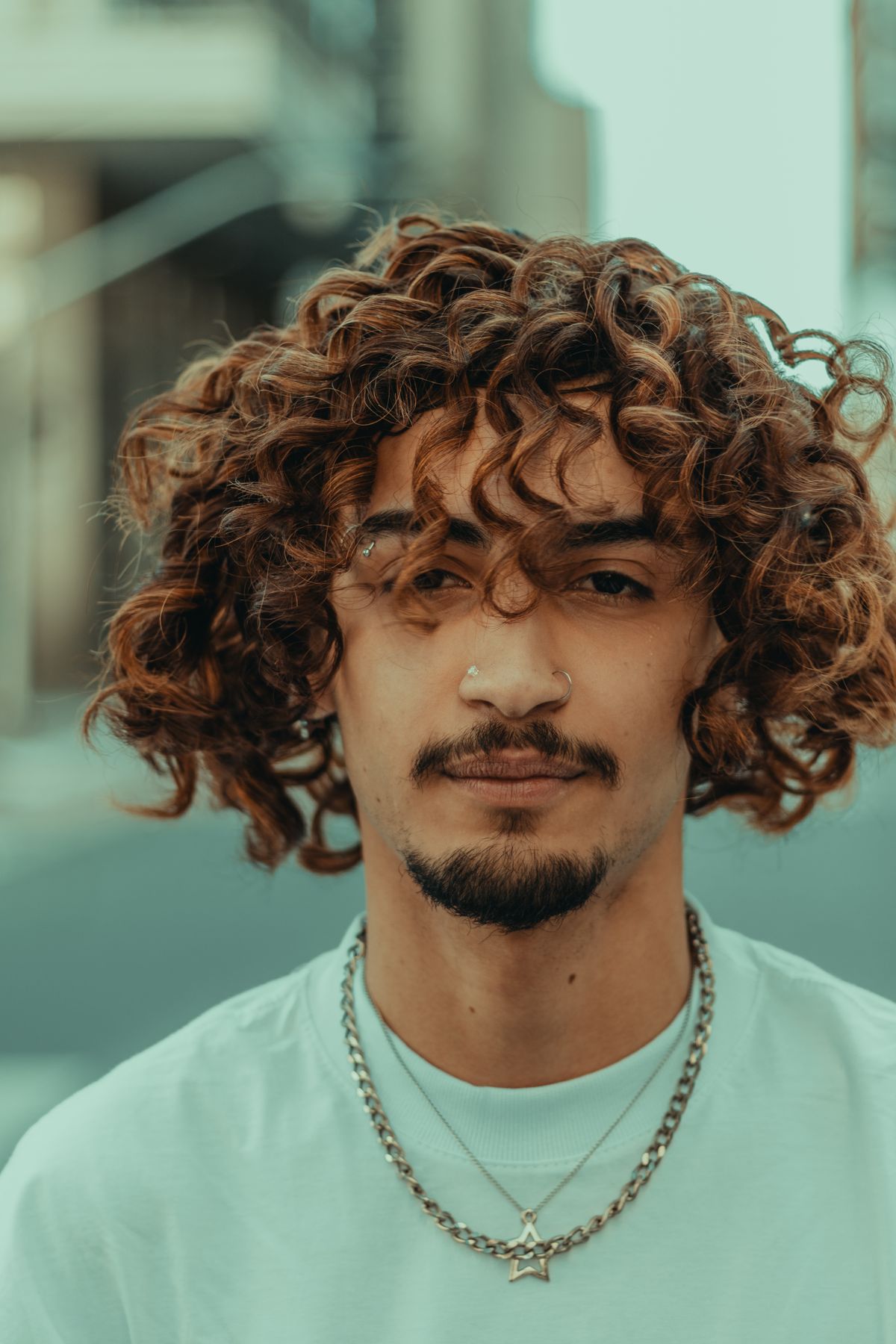
7. Drop Fade with Curly Top
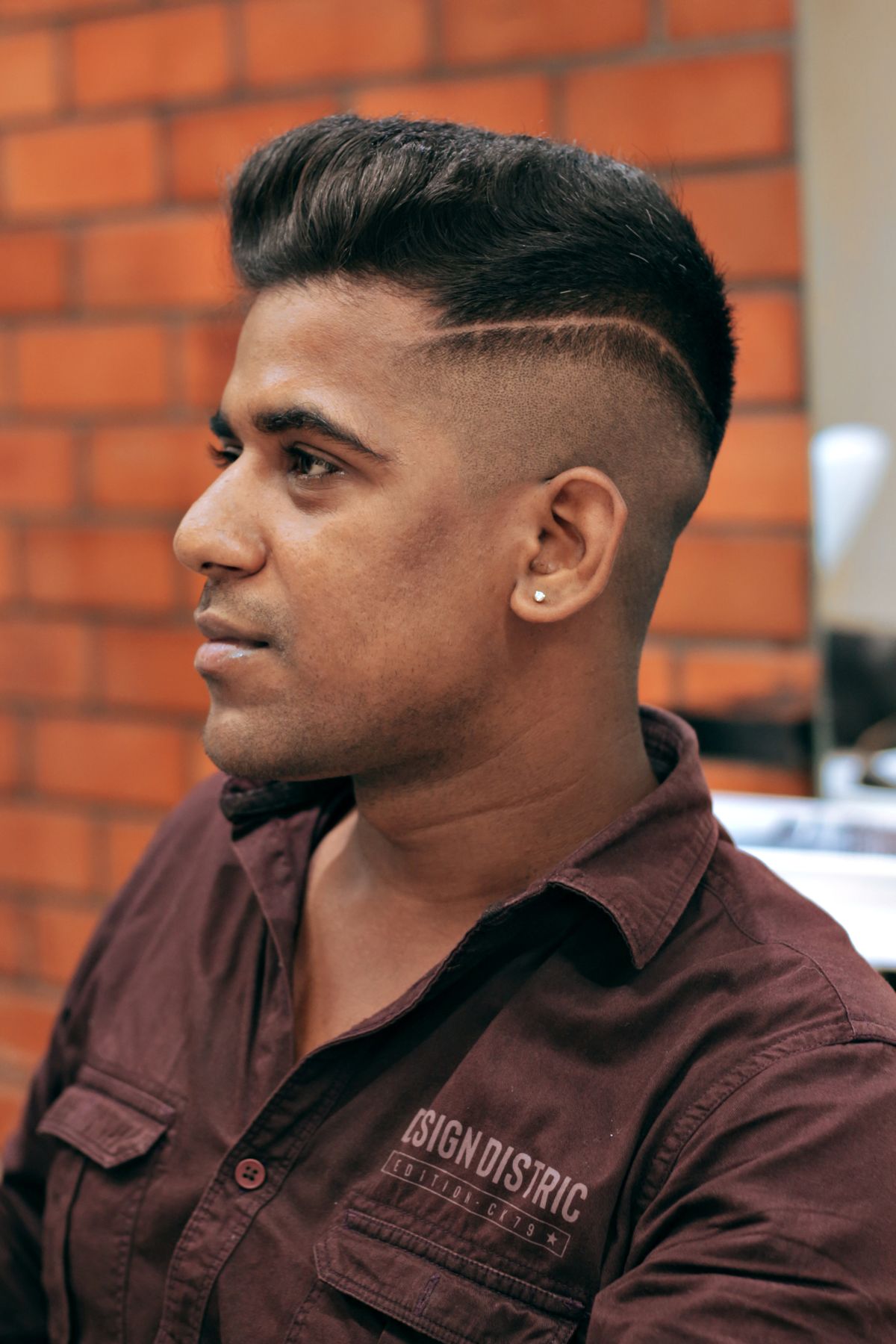
For thick curly hair: a drop fade (the fade line drops behind the ear) with the curls left longer on top. The fade controls the sides; the curls get to be the star.
Why it works: This is the cut that made peace between fades and curls. Clean edges, natural texture on top.
8. High Fade with Spiky Texture
Aggressive and modern: a high fade with short, spiky texture on top. The spikes aren’t 2000s frosted tips — they’re choppy, matte, and deliberate.
Best for: Younger guys, oval and square faces. The height on top elongates round faces too.

Classic & Professional
9. Side Part with Taper
The gentleman’s cut: a clean side part, tapered sides, neat top. On thick hair, the key is enough thinning that the top lies flat without looking shellacked.
Tell your barber: “Classic side part, taper the sides, thin the top enough that it sits down naturally.”
Product: Light pomade or cream — never heavy gel on thick hair (it looks wet all day).

10. Slicked Back Undercut
Disconnected undercut (long top, clipped sides with no blend) worn slicked back. Thick hair gives this cut the volume and presence it needs — thin hair can’t pull it off.
Maintenance warning: The disconnect needs cleaning up every 2–3 weeks or it loses the sharp contrast.
11. Ivy League
Longer than a crew cut, with enough top length to side-part. The Ivy League is the thinking man’s short cut — polished but not stiff.
Best for: Professional settings. The extra length on top needs thinning to avoid puffiness.
12. Caesar Cut
Short, horizontal fringe, even length all around the top. The Caesar is having a quiet comeback — it’s geometric, masculine, and brutally low-maintenance.
Why it works for thick hair: The uniform short length means no bulk issues anywhere. What you see is what you get.
Texture & Movement
13. Messy Quiff
The quiff’s rebellious younger brother: all the height, none of the neatness. Thick hair is practically designed for this — the messier, the better.
Styling: Sea salt spray on damp hair, rough blow-dry, tiny bit of clay. Imperfection is the point.
14. Broccoli Cut (Tapered)
Yes, the Gen-Z “broccoli” cut — but done right, with a proper taper instead of a bowl. The permed or naturally curly top with faded sides is a legitimate style when the proportions are right.
Honest take: It only works with the right texture and confidence. But when it works, it really works.
15. Curtain Cut (Short)
The 90s heartthrob cut, shortened for 2026: a middle part with curtain-like front pieces, faded sides. On thick hair, keep the curtains controlled — too much volume at the front overwhelms the face.
16. Textured Fringe
Forward fringe, choppy and textured, with faded sides. Covers the forehead, adds edge, and the texture keeps thick hair from looking like a helmet.
Best for: Guys with larger foreheads or who want an edgier look.
For Thick Curly & Coily Hair
17. Curly Top with Temp Fade
Temp fade (sharp at the temples) with the natural curls on top. Clean lines frame the face; the curls provide the personality. One of the sharpest looks in modern barbering.
Find a barber who specializes in your hair type. This matters more than the specific cut.

18. 360 Waves Cut
For coily hair: the waves cut (low all over, trained with brushing and durag). It’s a lifestyle as much as a haircut — but the results are unmatched.
Commitment level: High. Daily brushing, durag at night. But for those who commit, it’s iconic.

What to Tell Your Barber (Thick Hair Script)
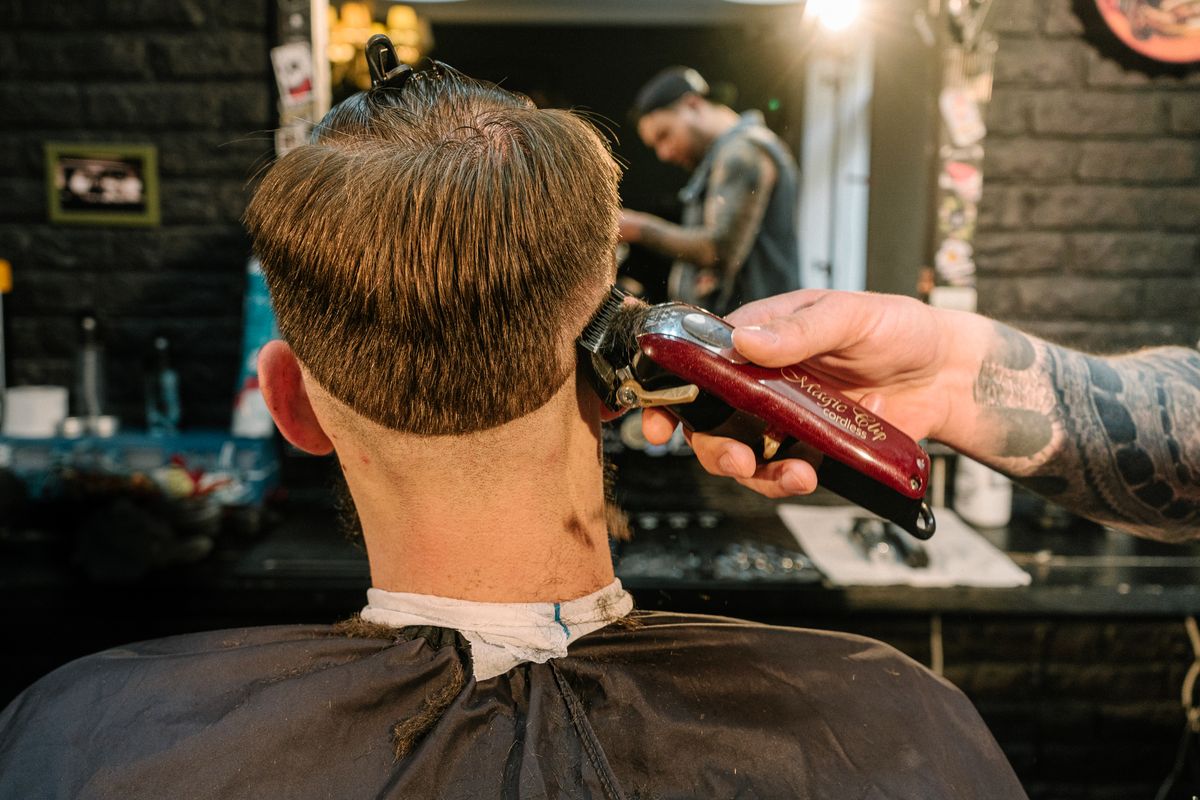
“My hair is thick and grows out fast. I need weight taken out with thinning shears — not just shorter. Keep the sides clean [fade/taper], and leave texture on top. I want something I can style in under 5 minutes.”
Show a photo. Barbers are visual — “textured crop” means different things to different people.
Styling Rules for Thick Hair
- Matte products only. Shiny products + thick hair = greasy helmet. Clay, matte paste, or sea salt spray.
- Less product than you think. Start with a pea-sized amount. Thick hair needs less help than you assume.
- Blow-dry with direction. 60 seconds of blow-drying in the direction you want the hair to go beats 10 minutes of product wrestling.
- Thin every cut. Ask for thinning/texturizing every single appointment. It’s not optional for thick hair.
- Don’t fight the volume. The best thick-hair styles use volume deliberately — crown height, textured tops — instead of trying to flatten everything.
Frequently Asked Questions
What is the best haircut for men with very thick hair?
A textured crop with a fade. The fade eliminates side bulk permanently, and the textured top turns thickness into style. It’s the highest-success-rate cut for thick hair.
Should men with thick hair get layers?
Yes — internal layers and thinning, which remove weight invisibly. Visible choppy layers on top add style; invisible thinning underneath adds manageability.
How often should thick hair be cut?
Every 3–4 weeks for fades (they grow out visibly), every 4–6 weeks for longer textured cuts. Thick hair shows growth faster than fine hair.
Does thick hair need conditioner?
Absolutely — arguably more than fine hair. Thick hair gets dry at the ends while the roots get oily. Condition the mid-lengths and ends every wash.
What products should men with thick hair avoid?
Heavy gels, shiny pomades, and anything oil-based applied near the roots. They weigh thick hair down and make it look greasy within hours.
Final Thoughts
Thick hair isn’t a problem — it’s raw material. The 18 cuts above all follow the same logic: control the sides, engineer the top, and let the thickness work for you instead of against you.
Book the cut, show your barber a photo, and say the magic words: “thin it out underneath.” Your mornings are about to get a lot shorter.
